
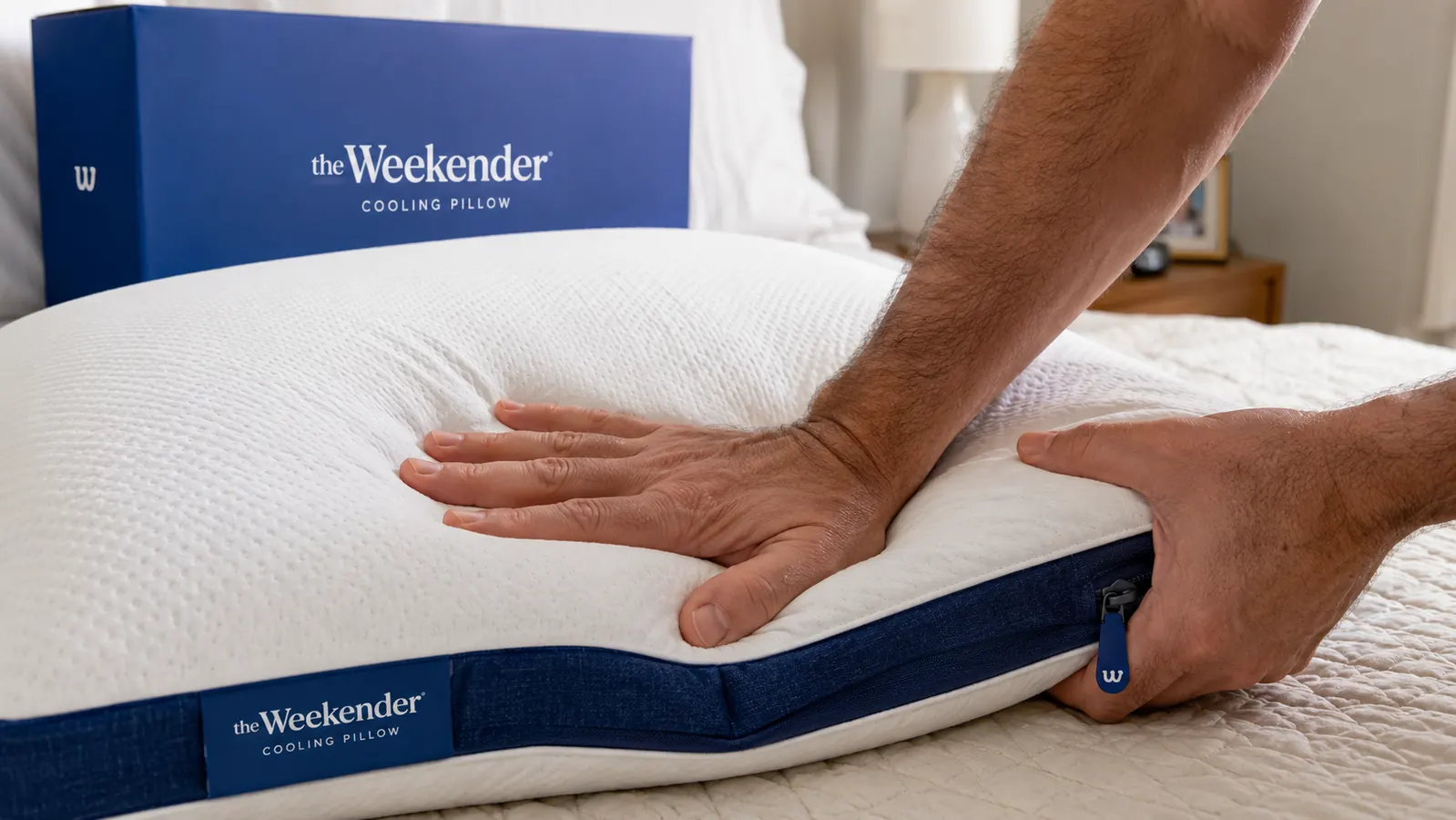
Eleven years producing an overnight radio show trained me to sleep on a reversed clock, out cold from roughly 9am to 4pm, in the same west-facing second-floor bedroom the whole time, with the afternoon sun landing straight through the window and the street's daytime traffic humming under everything. When people hear that schedule, they assume the noise is the hard part. It isn't. Heat is, and it's why the Weekender Cooling Gel Memory Foam Pillow ended up on my bed in the first place.
I want to start this one with the part most write-ups skip entirely: this pillow has a real list of quirks that never make it into the five-star reviews on the product page, everything from a chemical smell straight out of the packaging to a crinkling sound under your ear at 10am when the rest of the house has finally gone quiet. None of it ruined the pillow for me over the months I've slept on it. But if you're buying based on the marketing copy and the star rating alone, you deserve the full list before the box shows up, not after.
The Quick Verdict
Real cooling for the first stretch of sleep, but the packaging smell, the single size option, and the sound of the foam are tradeoffs the star rating alone won't tell you about.
Amazon Check Today's Price →Here's What the Star Rating Doesn't Tell You
A 4.3-star average sounds simple until you're the one dealing with the unboxing smell or the one-size-fits-all limitation. See today's price and current availability on Amazon before you decide.
Amazon Check Today's Price on Amazon →How I Tested It, and What I Almost Missed
I didn't set out to write a takedown of this pillow. I bought it to solve one specific problem, waking up with a hot cheek every afternoon around hour three of sleep, and I went in expecting a straightforward win or a straightforward miss. What actually happened was messier than either, which is why this review exists as a separate piece from the six-month long-term test I also ran. That one tracks how the pillow performed over time. This one is about the details that almost got lost because they only show up if you're paying close attention on day one, week two, and month four, not just checking whether it feels cool at first touch.
My method here was blunt. Every time something surprised me, good or bad, I wrote it down that same day rather than reconstructing it from memory later. A lot of what follows came from those notes, things I would have smoothed over or forgotten if I'd waited until the end of the test to write everything up at once.
I also made a point of asking myself a question most reviews never bother with: what would a first-time buyer, reading only the product listing, actually expect to happen? Then I compared that expectation, line by line, against what showed up in my own bedroom. That gap, between the listing's implied experience and the lived one, is really what this whole review is built around. It's a small shift in method, but it changes what you end up noticing.
The Unboxing Nobody's Photo Shows You
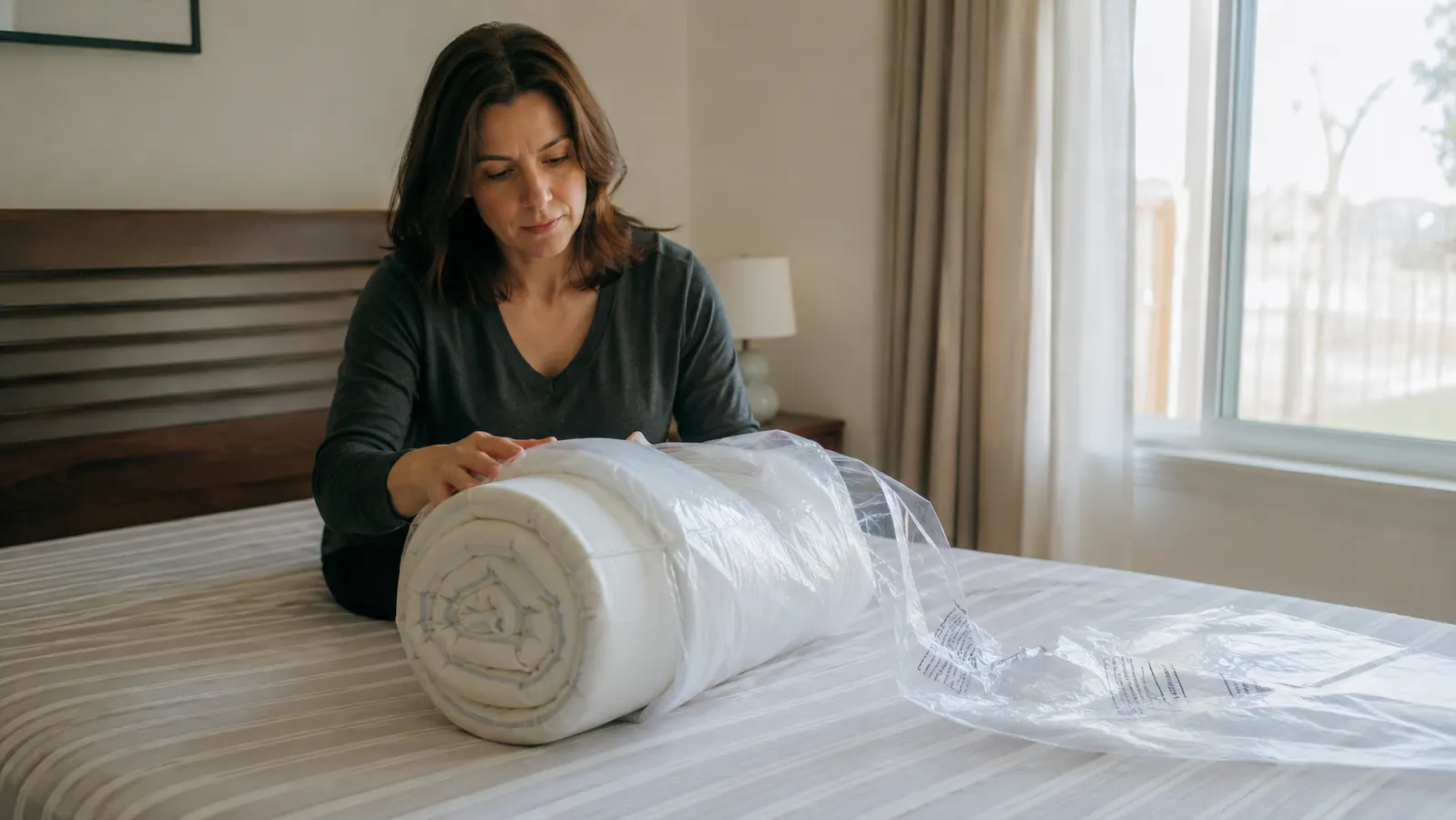
The listing photos show a plump, evenly shaped pillow sitting on a made bed. What actually arrives is a tightly vacuum-sealed roll, flattened to maybe a third of its real size, wrapped in plastic that takes real effort to cut open without nicking the fabric underneath. That's normal for compressed foam shipping, but nobody mentions how long the expansion actually takes. The pillow is usable within an hour, but it didn't reach its true loft until closer to 48 hours later, and the first night I slept on it, it was noticeably flatter and firmer than it would settle into by the end of the week.
The smell is the bigger surprise. Every review that mentions it calls it "mild" and says it fades in a day or two. Mine was stronger than mild for the first three nights, a sharp, chemical scent that lingered on the pillowcase even after I'd swapped it once. It wasn't unbearable, and it did fully clear by day five, but if you're sensitive to new-foam smell, plan to let this air out in a spare room for a couple of days before it touches your face, not just a couple of hours.
There's also a sound issue nobody warns you about. Memory foam with cut ventilation channels crinkles faintly when you shift positions, especially in the first few weeks before the foam has fully broken in. In a bedroom with daytime traffic noise outside, I barely noticed it. In a genuinely quiet room, or for anyone who's a light sleeper about sound specifically, that faint crinkle under your ear every time you roll over is worth knowing about in advance.
One more small thing worth flagging: the pillow itself is heavier than I expected picking it up out of the box, dense enough that shaking the plastic wrap loose took two hands instead of the one-handed unwrap you'd do with a lighter down pillow. It's a minor detail, but it set the tone early for just how dense this foam is compared to what most people are used to sleeping on.
What Happens When You Actually Get Up Mid-Sleep
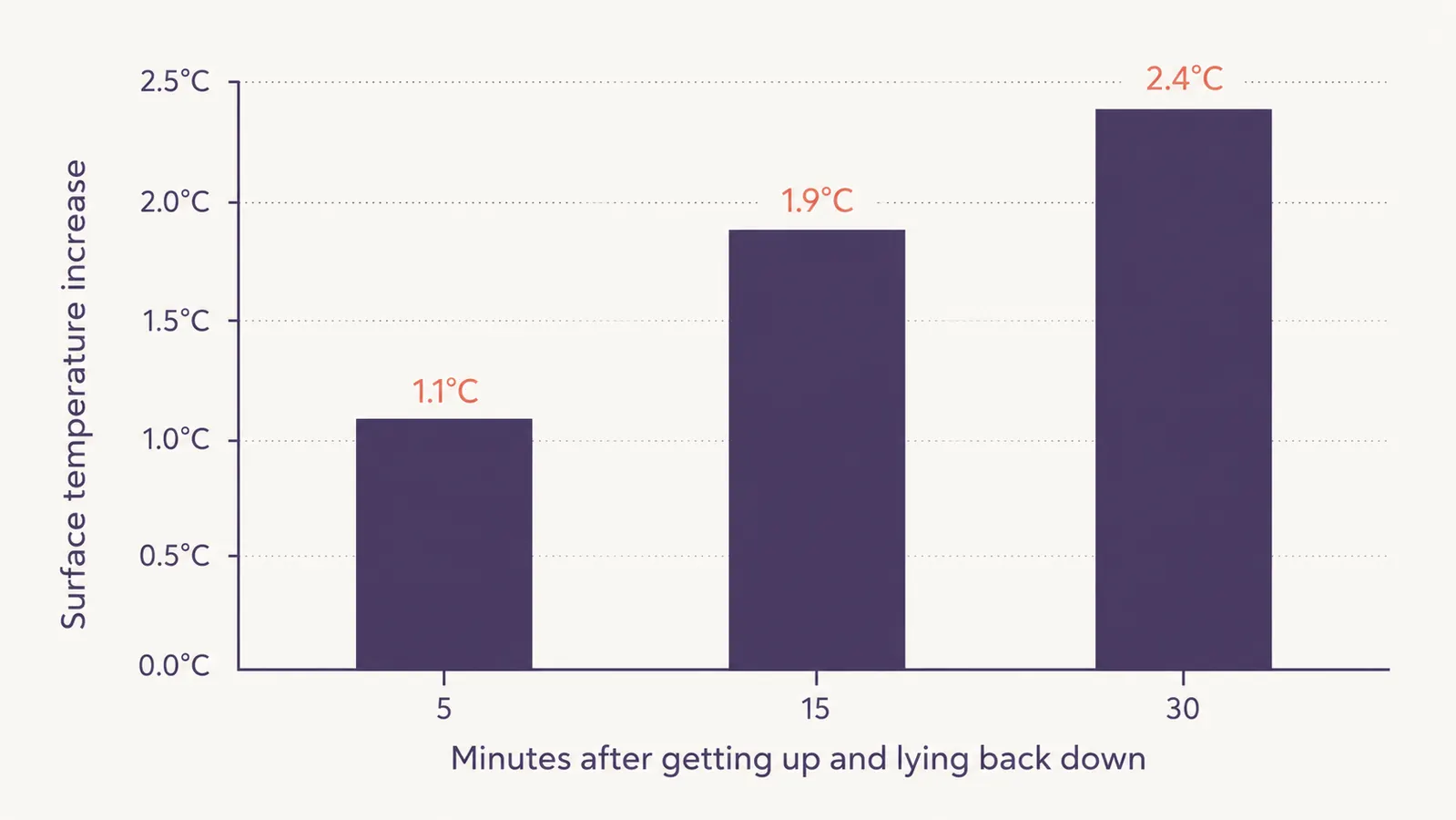
Every review, including the marketing copy itself, talks about how cool the pillow feels when you first lie down. What almost nobody mentions is what happens the second time, the third time, any time you actually get up during a sleep period and come back. On a daytime sleep schedule I'm up more than most people, a bathroom trip, checking a delivery, letting a neighbor's dog stop barking at nothing. Every single time I got back into bed, the pillow had already lost its cool surface and needed to rebuild it from scratch, which took a few minutes longer than the very first lie-down of the day.
That's a meaningfully different experience than the one-time cooling test most reviews describe. The gel and ventilation channels do the same job every time you lie down cold, but they don't hold a stored charge of coolness that survives you getting up and moving around a warm room for ten minutes. If your sleep is interrupted more than once a night, expect to feel that warm-up effect more than someone who sleeps straight through.
I timed this out of curiosity rather than any scientific rigor: a five-minute break out of bed cost me almost no cooling at all when I got back in, but a fifteen-minute break, the length of an actual bathroom trip plus checking my phone, meant the surface had warmed close to halfway back toward room temperature. A full thirty minutes out of bed and it was essentially back to a standard pillow, cooling reset and all, waiting to be earned again from the moment I laid my head back down.
The Size Limitation Nobody Puts in the Headline
This pillow ships in one size, standard, which the listing lists as fitting queen beds reasonably well. What that description leaves out is how it looks and feels on anything larger. On a king bed, a single standard pillow looks lost, and you'll need to buy two to fill the space the way a king pillow normally would, which changes the math on this pillow compared to how it reads on the page. There's no king option at all if that's what you were hoping to click straight to.
The density is also a bigger adjustment than the listing implies for anyone coming from a down or down-alternative pillow. This is a dense, structured foam pillow, not a soft, moldable one. My first few nights felt more like sleeping on a firm cushion than a pillow, and it took closer to two weeks, not the two or three nights I'd guessed, before my neck stopped noticing the difference. If you've read how this one actually compares to a Tempur-Pedic Cloud pillow, the density gap is one of the clearest differences between the two, and it's worth knowing which side of that you'd rather be on before you buy either one.
It's also worth saying plainly that this isn't a pillow you can reshape by adding or removing fill, the way you can with a shredded-foam alternative. What you unbox is the loft you're stuck with, permanently. If the standard loft doesn't match your preferred sleep position once it's fully expanded, there's no adjustment knob here, only a return.
What Six Months of Washing Actually Did to the Cover
The foam core held up fine, but the cover is where the wear actually shows. After roughly a dozen cold washes and air dries, the fabric has started to pill slightly along the seam where my cheek presses most nights, small fuzzy nubs that weren't there in month one. It's not falling apart, and it still looks presentable from a normal distance, but running a hand across that section now feels noticeably different than it did out of the box.
The zipper is functional but stiff, and it's caught on the inner foam liner twice while I was rezipping the cover after washing, which meant carefully backing it out rather than forcing it. Neither issue is a dealbreaker, but a listing photo of a smooth, taut cover doesn't prepare you for a slightly textured one by month six, or for the small extra care a stubborn zipper needs every laundry day.
Drying is the other quiet gotcha. The care tag warns against high heat, and I found even a medium dryer setting left the cover slightly warped at one corner the one time I tried it, tight enough that it took a full re-stretch by hand to sit flat on the pillow again. Air drying flat, which takes most of a day in a bedroom that isn't especially warm until the afternoon, is really the only reliable option, and the listing doesn't spell that out anywhere near as clearly as the care tag does.

Where the Listing Oversells the Cooling Claim
The product description leans hard on language like all-night cooling and advanced temperature regulation. Having slept on this through an entire warm season, I'd push back on "all-night" specifically. What you're actually getting is a strong, genuine cooling sensation at the start of each sleep period, driven by gel density and airflow, not an active system that keeps working at the same strength for eight straight hours. That's a real product with a real benefit, just not the one the copywriting implies if you read it literally.
I've also seen buyers online frame this as a fix for night sweats specifically, and I'd be careful with that framing. It reduces surface heat buildup from the pillow itself, which helps, but it isn't treating the underlying cause of night sweats the way a marketing headline can make it sound like it will. It's one part of a heat-management routine, not the whole solution, and I go into what the fuller routine actually looks like in the full story of how I built my own routine around this pillow.
None of this makes the pillow a bad buy. It makes the listing an optimistic one, which is true of most product pages in this category. The gap between what's promised and what's delivered is small enough that I'd still recommend it, but it's a gap worth walking in with your eyes open about, rather than discovering three weeks in when the marketing language stops matching what you're actually feeling under your cheek at 1pm.
What I Liked
- Genuine surface cooling at the start of every sleep period, not just marketing language
- Ventilated gel foam breathes noticeably better than solid memory foam
- Cover is machine washable on cold and survives repeated washing intact
- Held its overall shape well past the six-month mark of daily use
- Priced well below most name-brand cooling pillows in the same category
Where It Falls Short
- Off-gassing smell out of the packaging is stronger and lasts longer than most reviews suggest
- Full loft takes up to 48 hours to expand, not just an hour or two
- Faint crinkling sound from the foam channels, most noticeable in a quiet room
- Ships in one size only, with no king option and an awkward fit on a king bed alone
- Cover shows mild pilling by month six along the area that gets the most contact
- Cooling effect resets slowly after any mid-sleep disturbance, not just at bedtime
The cooling is real. It just isn't the set-it-and-forget-it, all-night system the listing copy makes it sound like.
Who This Is For
This pillow makes the most sense for someone who wants an honest, affordable step up from a standard pillow and can tolerate a short break-in period, a few days of smell and adjustment, in exchange for that. It's a good match for queen and smaller beds, for people who sleep straight through most nights without a lot of getting up, and for anyone who's fine with a firmer, denser feel than a down pillow. If you go in expecting exactly what the product page promises, word for word, you're more likely to end up disappointed than if you go in with this list in hand first.
Who Should Skip It
Skip it if you're shopping for a king bed and want a single pillow to fill that space, if you're extremely sensitive to new-product smell and can't dedicate a few days to airing it out, or if a genuinely silent pillow matters more to you than a cooling one. Frequent night wakers who get up and back into bed several times should also temper their expectations, since the cooling effect has to rebuild each time rather than staying charged through interruptions.
Know the Tradeoffs Before You Click Buy
This isn't a perfect pillow, but it's an honest one for the price. See today's price and current availability on Amazon and decide with the full picture, not just the five-star average.
Amazon Check Today's Price on Amazon →