
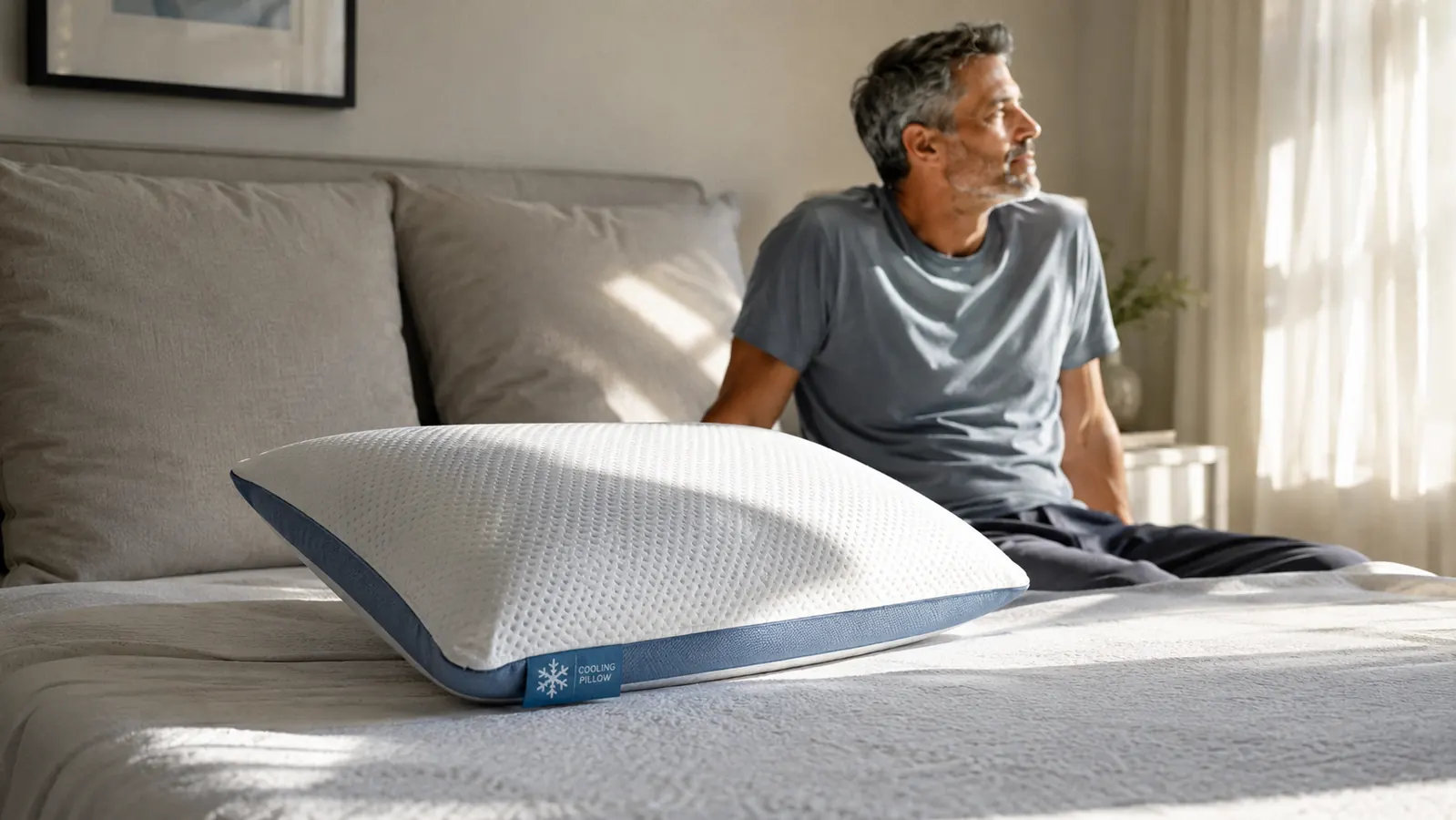
Night sweats don't wait for the calendar to say summer. I spent eleven years producing an overnight radio show, which meant sleeping from about 9am to 4pm instead of at night. My bedroom faces west on the second floor, so by the time I finally get under the covers the afternoon sun is already coming straight through the window, and the street below is running full daytime traffic and daytime heat. Waking up with a damp pillow under my neck was routine for years, no matter how low I set the thermostat or how many pillowcases I rotated through. The problem wasn't the number on the thermostat. It was that a standard pillow holds heat against your head and neck instead of moving it away.
The Weekender Cooling Gel Memory Foam Pillow is the one change that actually cut the number of damp-pillow mornings, not because it makes the room cooler, but because it stops trapping heat where a standard pillow would. Here are ten specific, tested reasons it works against night sweats, gathered from real use during the hottest stretch of daylight sleeping I've had.
The Pillow Built to Stop Trapping Heat Against Your Neck
If you wake up with a damp pillow no matter how low the thermostat goes, the problem might be the pillow itself, not the room. The Weekender Cooling Gel Memory Foam Pillow is worth understanding before you buy another fan.
Amazon Check Today's Price on Amazon →Gel-Infused Memory Foam Pulls Heat Away Instead of Holding It
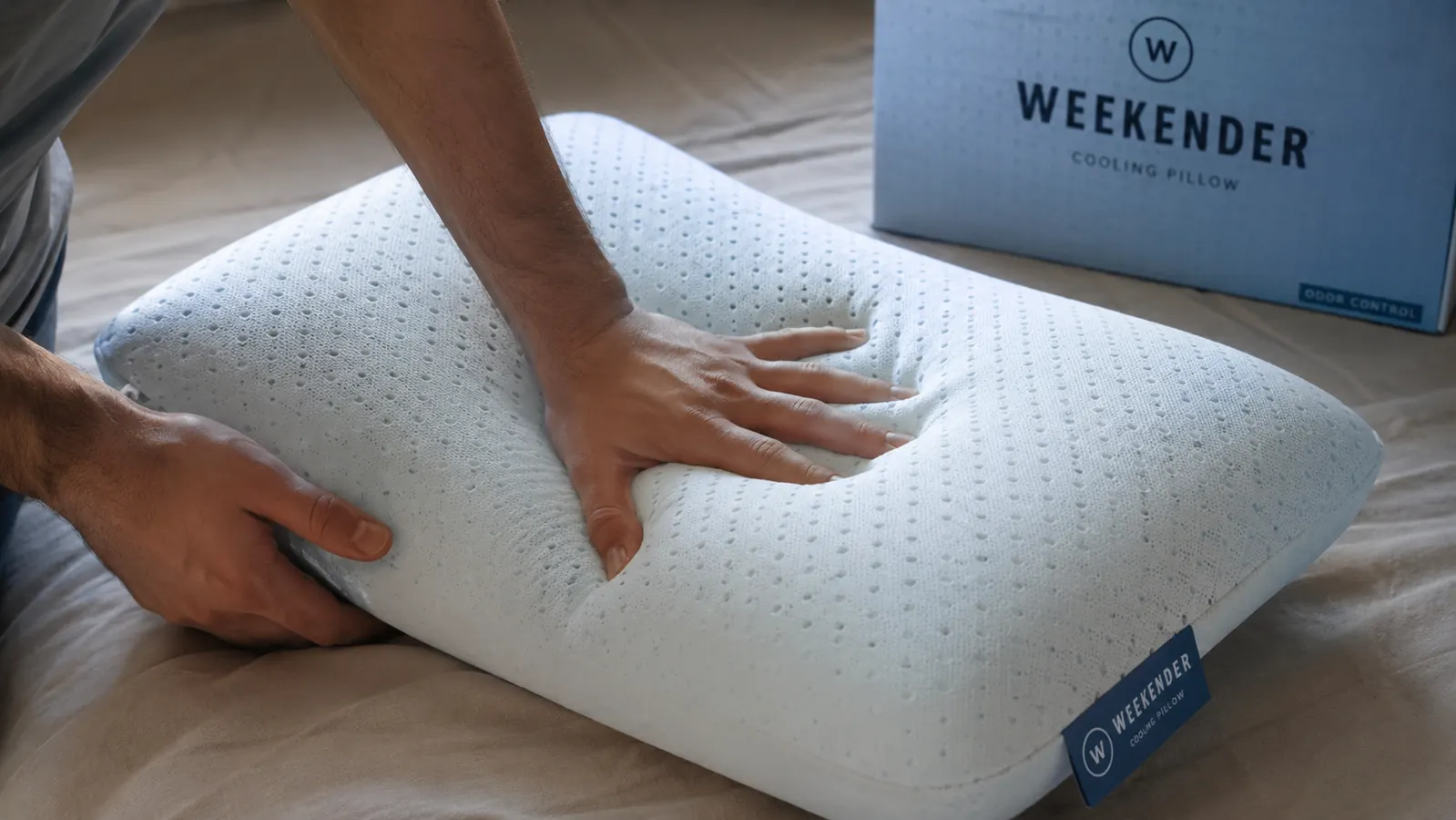
The gel beads swirled through the memory foam aren't decorative, they conduct heat away from your head and neck the way a stone floor pulls heat out of bare feet. A standard foam pillow does the opposite, it insulates, holding your own body heat right up against your skin all night. Switching to the Weekender was the first time in years I noticed the top of the pillow actually felt cooler than my hand when I woke up at 4pm, rather than warmer.
Ventilated, Open-Cell Design Lets Air Actually Move Through It
Memory foam alone doesn't cool anything, it's the open-cell structure that lets air pass through instead of getting sealed inside like a solid foam block. The Weekender is cut with that ventilation built in, so heat has somewhere to go instead of building up in one dense layer. On the sticky, sun-heated afternoons I fall asleep in, that airflow is the difference between a pillow that stays workable and one I have to flip every twenty minutes.
It Solves a Heat Problem Willpower Can't Touch
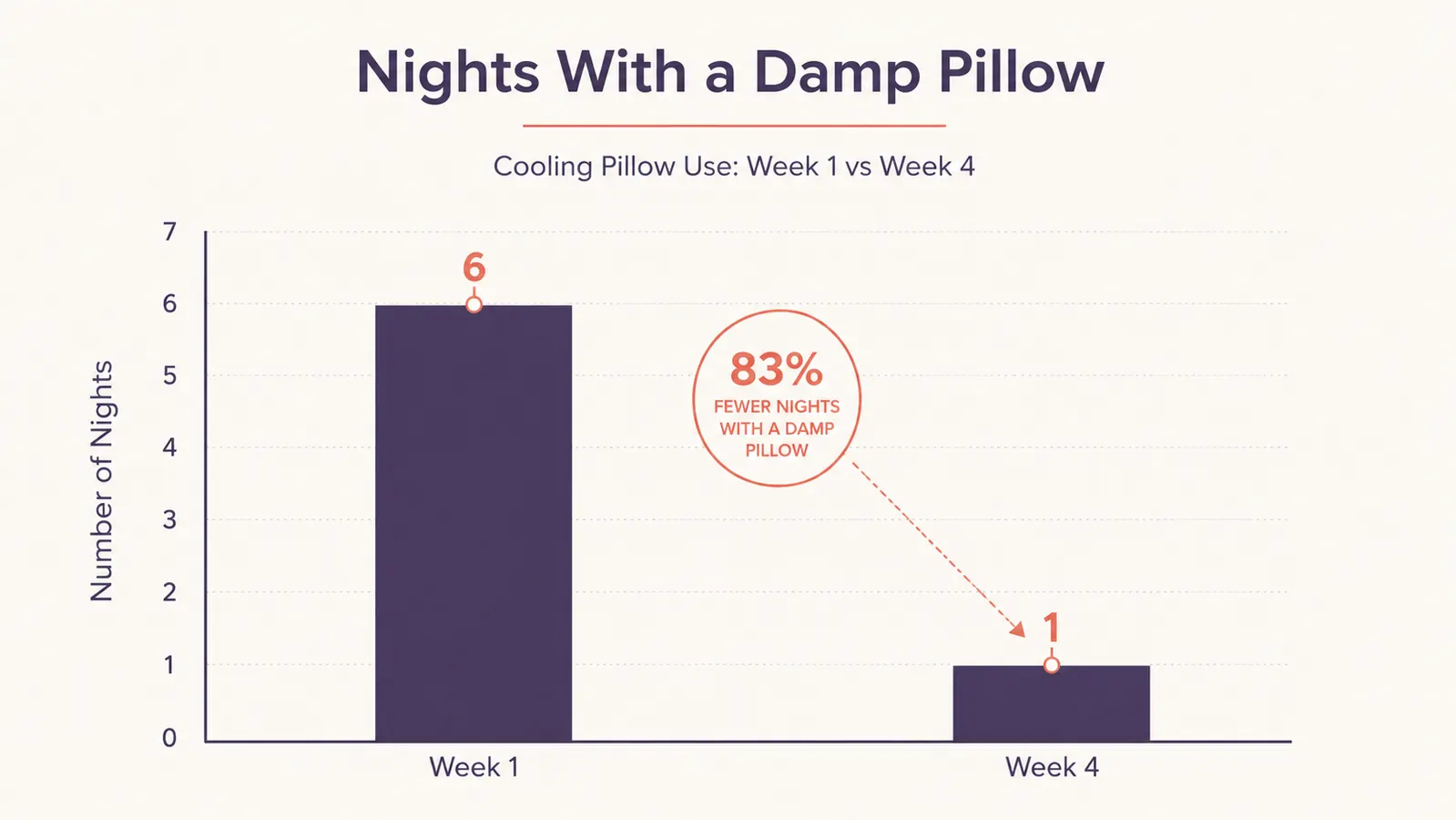
I tried lowering the thermostat, sleeping under just a sheet, even a bedside fan pointed straight at my face, and none of it touched the specific problem of a hot pillow against my neck. Night sweats from a pillow that traps heat aren't a discipline problem, they're a materials problem, and no amount of trying harder fixes a pillow that insulates instead of releasing heat. Once I changed the actual object under my head, the sweating dropped off in a way none of my other adjustments managed.
The Cover Fabric Doesn't Trap Moisture Like a Standard Pillowcase
A lot of night sweat discomfort isn't the heat itself, it's the damp fabric sitting against your skin afterward. The Weekender's cover is designed to wick moisture rather than hold it, so even on a night I do sweat some, the surface dries faster and doesn't leave that clammy, stuck-to-the-pillow feeling I used to wake up to. That faster dry time matters more than people expect until they've actually felt the difference for themselves.
It Works Even When Your Sleep Schedule Guarantees the Room Is Warm
I don't get the luxury of a cool, dark room. I'm asleep from 9am to 4pm with the afternoon sun coming straight through a west-facing window, which means my bedroom is warmer than most people's at bedtime by design, not by accident. A cooling pillow that depends on a cold room to work would be useless to me. The gel and ventilation work the same whether the room is 65 degrees at midnight or 78 degrees at 1pm with sun on the glass.
The Cooling Is Passive, No Batteries, No Cords, No App
There's no charging, no plugging in, nothing to remember before bed. The cooling comes entirely from the material itself, the gel infusion and the open-cell foam do the work without any powered part that can fail, need charging, or get left off by accident during a groggy afternoon wind-down. For someone whose whole schedule is already backwards, one less thing to manage before sleep is worth more than it sounds like on paper.
It Holds Its Shape Instead of Bunching Heat Into One Spot
Cheaper foam pillows compress unevenly over a few months, and once they bunch up, heat concentrates in whatever section is still thick enough to hold your head. The Weekender has kept an even loft for me across many months of daily use, which means the cooling surface stays spread out instead of collapsing into one hot, compressed patch under my neck by month three.
The Cooling Effect Doesn't Fade Halfway Through the Sleep Cycle
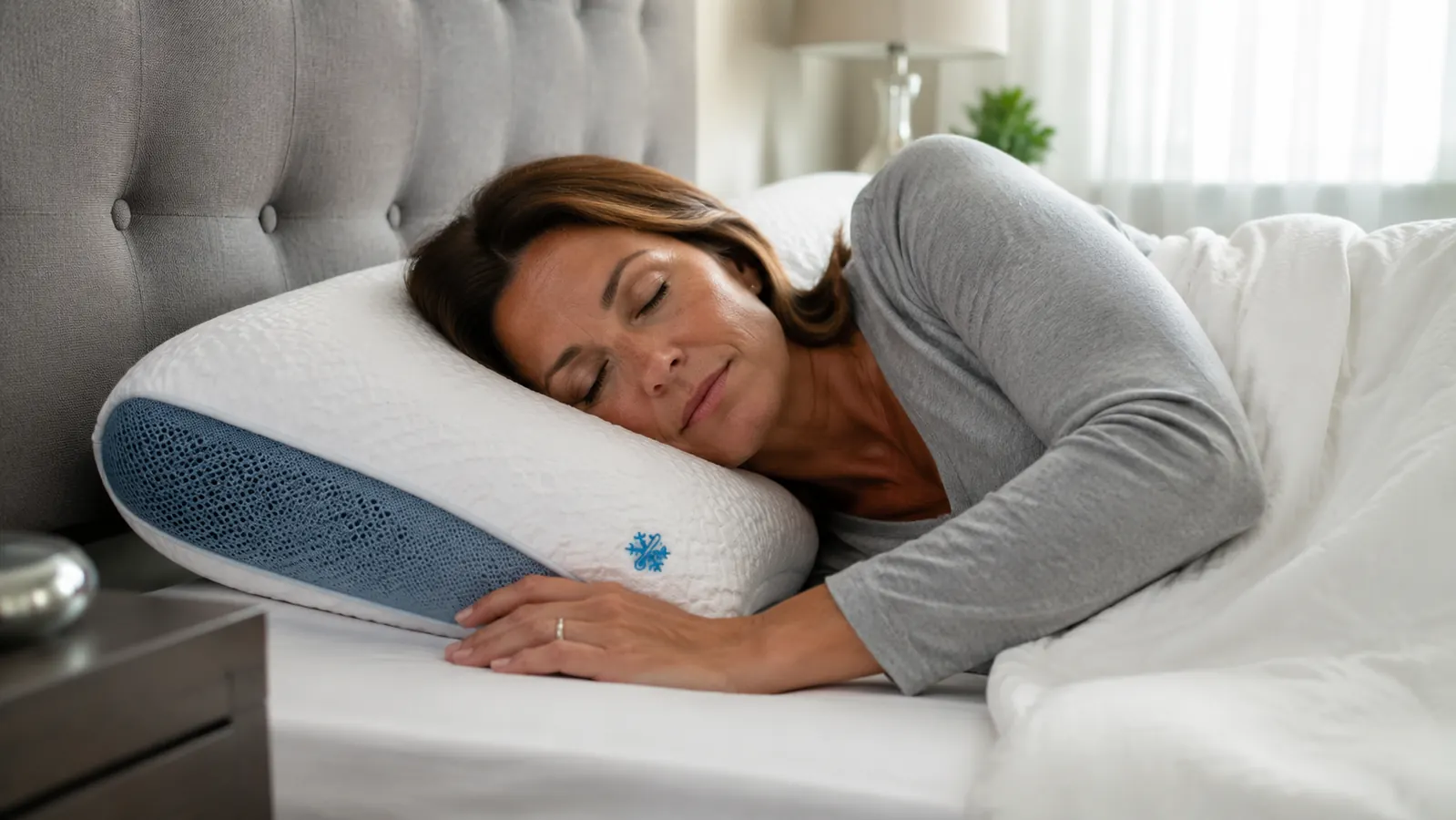
Some cooling products work great for the first twenty minutes and then quietly stop doing anything, gel packs and cooling towels included. Because the gel is infused through the foam itself rather than sitting as a thin surface layer, the effect doesn't wear off partway through a seven-hour daytime sleep the way a cooling pad I tried first did by the third hour.
It Pairs With Your Other Cooling Habits Instead of Replacing Them
A cooling pillow isn't a substitute for blackout curtains, a fan, or breathable sheets, it's one more piece that works alongside them. I've written a full walkthrough on stacking a cooling setup for daytime sleeping if you want the complete version of what actually got my bedroom livable during the hottest stretch of the year, not just the pillow piece of it.
It's an Easy First Fix Before Bigger Purchases
Before I ever considered a new mattress or a dedicated bedroom AC unit, swapping the pillow was the cheapest, lowest-effort change available, and it made a noticeable dent on its own. If night sweats are new or mild, this is where I'd start before spending real money on anything bigger. If they're still a problem after a pillow swap, that's useful information too, it tells you the room or the mattress is doing more of the damage than you thought.
What I'd Skip
A cooling pillow doesn't fix a room that never cools down, and it won't undo sleeping through the hottest hours of daylight the way I do. If your night sweats are tied to a medical cause, a hormonal shift, or a fever, this is a comfort layer, not a treatment, and it shouldn't replace a conversation with a doctor. It also won't rescue a mattress that's already trapping heat from underneath, so if you're still overheating after a pillow swap, look at what's beneath you next. And loft preference matters here, this pillow runs a bit firmer than a down alternative, so if you sleep exclusively on your stomach, test it before committing. For the unfiltered version of six months with this exact pillow, including what annoyed me, my full long-term review covers those tradeoffs directly.
A cooling pillow doesn't cool the room. It stops the one object touching your skin all night from working against you.
Stop Waking Up to a Damp Pillow
If the heat is coming from the pillow itself, not just the room, this is the specific, physical fix worth trying before anything bigger.
Amazon Check Today's Price on Amazon →