

I've spent eleven years producing an overnight radio show, which meant sleeping from 9am to 4pm in a west-facing second-floor bedroom where the afternoon sun comes straight through the window. Add in daytime traffic noise from the street below, and my body already had enough working against it before I ever got to the pillow. What I noticed within the first few weeks of that schedule was that heat was the real tiebreaker. On a cool morning I could sleep through the light and the noise just fine. On a warm one, every pillow I owned turned into a heat trap by hour two, and I'd wake up flipping it to the cool side every twenty minutes.
I bought the Weekender Cooling Gel Memory Foam Pillow in February specifically to test whether a gel-infused, ventilated foam pillow could hold up to sleeping in direct afternoon sun for six months straight, not just survive a week of enthusiastic first impressions. This is that six-month report: what changed, what didn't, and where the cooling claim on the package actually holds up once the foam has taken thousands of hours of body heat.
The Quick Verdict
Genuinely cooler for the first two to three hours of sleep, with loft that held up better than expected, though the cooling sensation fades faster than the marketing implies.
Amazon Check Today's Price →Still Flipping Your Pillow at 2pm Looking for the Cool Side?
Gel-infused foam and a ventilated core are built to level out that heat before it wakes you up. See today's price and current availability on Amazon.
Amazon Check Today's Price on Amazon →How I've Used It: Six Months on a Reversed Schedule
I started sleeping on it the first week of February, in the same west-facing second-floor bedroom I've had through this whole eleven-year stretch of overnight radio work. That room gets full sun starting around noon, so by the time I'm actually trying to fall asleep at 9am, I'm just ahead of the worst of it. By 11am or so, right in the middle of my deepest stretch, the sun is coming straight through the blinds and the room can run several degrees warmer than the rest of the house. The Weekender went straight onto my side of the bed, no case swap, no gradual break-in period. I wanted to know what it would do on day one and what it would still be doing in month six.
For the first six weeks I kept my old pillow, a flat, no-name polyester one from a big-box store, on the guest bed so I had something to compare against on nights when I wanted to double-check I wasn't imagining the difference. There was a difference. Lying down on the Weekender for the first time, the surface felt noticeably cooler against my cheek, the kind of cool you get from a fresh pillowcase, except it lasted longer than a fresh case usually does before my own body heat caught up to it.
I've washed the outer cover roughly a dozen times since February, always on cold, always air dried since the tag warns against high heat shrinking the fabric. The gel-infused foam core itself has never gone in a washer, obviously, just aired out on the two or three days a month I strip the whole bed down. Six months of daytime sleeping means six months of a pillow absorbing body heat during the warmest hours of the day, which is about as hard a test as a cooling claim can get.
By month three I'd stopped thinking about the pillow entirely, which is honestly the best sign a piece of bedroom gear is working. I wasn't reaching for a second pillow to prop against the window to block extra sun, wasn't repositioning halfway through the morning out of habit, and wasn't waking up with the damp, overheated feeling that used to follow the worst June afternoons. The days I did notice it were the days I skipped my usual routine, traveled, or slept on a different pillow entirely, which made the baseline comparison easy to keep making even without the old polyester pillow sitting on the guest bed anymore.
The Gel-Infused Foam and What Cooling Actually Means
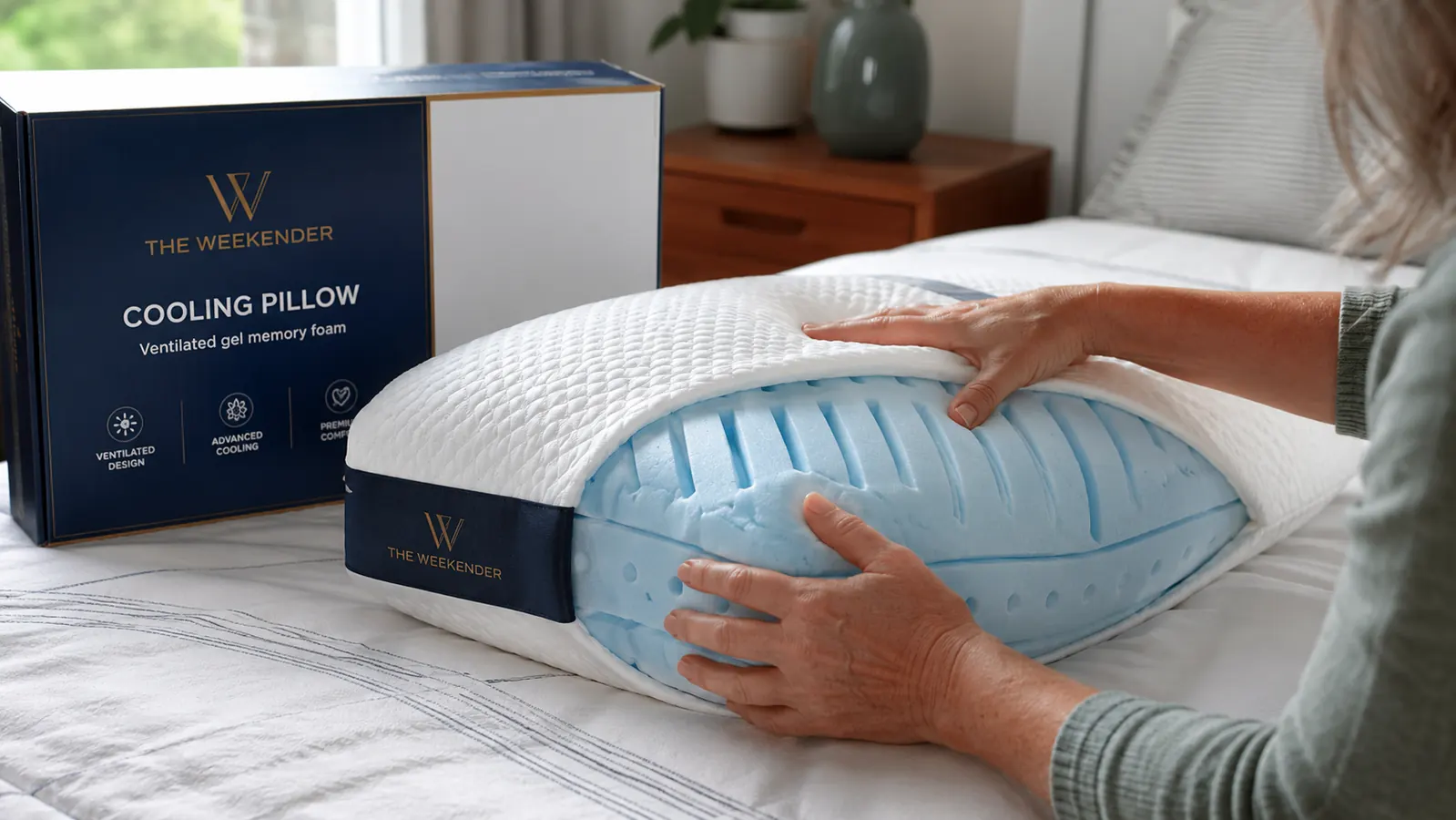
The Weekender uses gel-infused memory foam with a ventilated design, small cut channels running through the core that are meant to let air move through instead of trapping it the way solid memory foam does. In practice, that means the pillow starts cool because the gel particles pull heat away from the surface faster than plain foam, and it stays reasonably breathable because the channels give body heat somewhere to go instead of building up under your head.
It isn't the same mechanism as a phase-change cover, the kind that uses a chemical layer to actively regulate temperature over hours. This is a passive, physical cooling effect built from dense gel plus air channels. That distinction matters because it sets expectations correctly. The Weekender feels cold to the touch the moment you lie down, on par with any cool pillow in that first thirty seconds, but it's working with airflow and material density rather than an active temperature-regulating layer, and that shows up later in how long the effect lasts.
For anyone who wants the fuller mechanism, gel-and-ventilation designs like this one work by dissipating heat rather than storing it, and I go through why that specific difference matters for night sweats in 10 reasons cooling pillows stop night sweats. The short version for this review: gel-infused foam buys you real, noticeable relief at the start of a sleep period, not an all-night guarantee.
Firmness and Loft After Six Months of Nightly Compression
The Weekender ships as a standard-size pillow with medium loft, somewhere around five to six inches uncompressed. Out of the box it felt firmer than I expected from a memory foam pillow, more supportive than plush, which took two or three nights for my neck to adjust to. By week three it had softened into a true medium: enough give to cradle my shoulder when I'm on my side, enough structure that my neck wasn't dropping below my spine line.
Six months in, the loft has held up better than most pillows I've tested at this price. There's a slight, expected softening, maybe ten percent less bounce-back than day one, but no lasting dent in the center and no flattening at the edges. I fluff it most mornings before I make the bed, which I think helps, but even on the days I skip that step it recovers its shape within an hour or two.
The edges have stayed square, which matters more than it sounds. A lot of cheaper memory foam pillows round off at the corners within a couple of months and lose the structure that keeps your head centered overnight. This one still looks close to its original shape when I compare it against the photos I took in the first week.
I did notice one change worth flagging: the recovery speed slowed down slightly between month four and month six, more like a beat and a half instead of an instant snap-back when I first sit up in the morning. That's a small, expected shift for any foam product taking daily compression, and it hasn't affected how the pillow actually feels once I'm lying on it, just how quickly it looks tidy again for photos.
Neck Position and the Details a Spec Sheet Won't Tell You
One thing I didn't expect to care about going in was how quiet the pillow is. My old polyester pillow crinkled every time I shifted position, which is exactly the kind of small, sharp sound that pulls you halfway out of sleep when you're already fighting daytime traffic noise through the window. The Weekender is silent under normal movement, no crackle, no shifting-fill sound, which turned out to matter almost as much as the temperature did for how deep my sleep actually got.
Neck position has stayed consistent across the six months, which I credit to the loft holding rather than any special contouring. I'm a side-to-back sleeper, and the medium height keeps my neck roughly level whether I'm curled toward the window or flat on my back facing the ceiling. I haven't woken up with the stiff, tilted-neck feeling that used to follow nights on a flatter, worn-out pillow, and that held true through the softening I described above.
The one adjustment I made was buying a slightly thicker cotton pillowcase to layer over the included cover during the warmest stretch of summer. It wasn't necessary, the pillow performed fine without it, but it added a small extra layer of surface coolness on the handful of afternoons where the room genuinely felt like a greenhouse by 1pm. That's a personal preference more than a flaw in the product, and most people in a normal-temperature bedroom won't need to think about it at all.
Where the Cooling Effect Falls Short
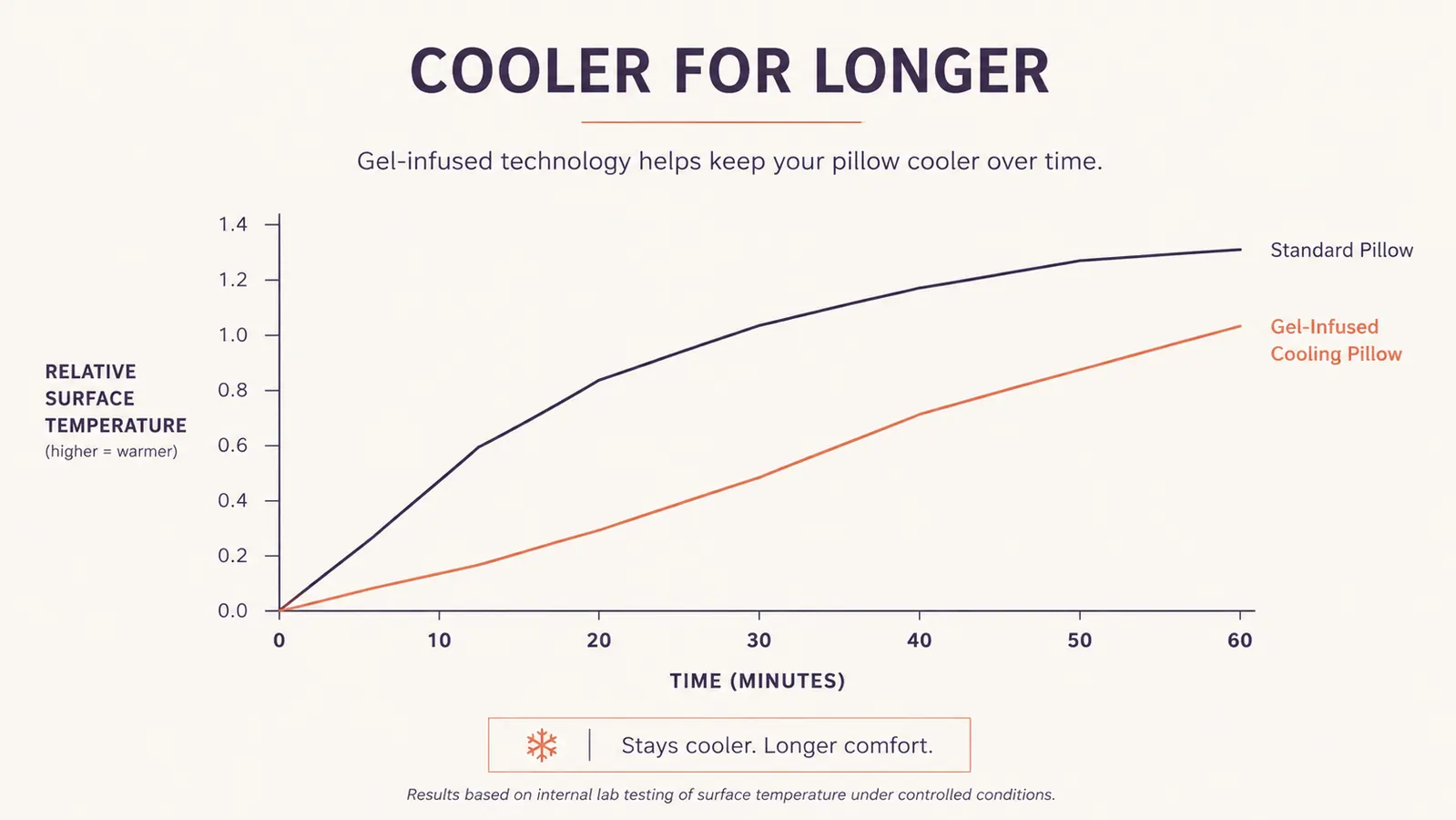
Here's the part the packaging doesn't spend much time on. The cooling sensation is real for roughly the first two to three hours, then it levels out to a normal, room-temperature pillow. On an average day that's not a problem, because I'm asleep during the coolest stretch of my cycle. On the warmest days, the ones where the west-facing window turns my room into a greenhouse by early afternoon, I still wake up around hour four needing to flip the pillow or shift to the cooler half.
That's a real limitation, not a dealbreaker, but it's worth being honest about since I bought this specifically to solve a heat problem. A phase-change cover or a pillow built around active cooling technology would likely hold the effect longer into a sleep cycle. This one delivers it through gel density and airflow, which front-loads the benefit rather than spreading it evenly across eight hours.
The other tradeoff is a mild off-gassing smell for the first three or four nights, standard for memory foam but worth airing out before the first night if you're sensitive to that kind of thing. It faded completely by the end of the first week and never came back, even after multiple washes of the cover.

The Alternatives I Considered First
Before buying the Weekender I looked seriously at a Tempur-Pedic Cloud pillow, since it's the name that comes up constantly in cooling-pillow searches and I wanted to know if the price gap actually bought better performance. I go through that full comparison, spec by spec, in Weekender Cooling Pillow vs Tempur-Pedic Cloud, but the short version is that the Tempur-Pedic held its shape a little longer and felt more premium out of the box, without a proportional jump in how long the actual cooling lasted.
I also tried a basic buckwheat pillow for about three weeks in April, hoping the natural airflow between the hulls would out-cool the gel foam entirely. It did stay cool longer, but the firmness and the rustling sound every time I shifted position made it a poor fit for someone already sleeping through daytime household noise. The Weekender was quieter and closer to what I was used to, which mattered more once I actually lived with both for a while.
What I Liked
- Noticeably cooler than a standard pillow for the first two to three hours of sleep
- Held its loft and square edges through six months of daily use
- Removable cover machine washes on cold without shrinking
- Ventilated gel foam breathes better than solid memory foam
- Priced well below premium cooling pillows like Tempur-Pedic's cooling line
Where It Falls Short
- Cooling effect levels off well before an eight-hour sleep cycle ends
- Mild off-gassing smell for the first several nights
- Medium loft may run low for side sleepers with broader shoulders
- Cover isn't as plush or premium-feeling as higher-priced alternatives
The first two hours are genuinely, measurably cooler. After that, it's just a solid pillow, not a magic one.
Who This Is For
This pillow is a good fit for a hot sleeper who wants a real, affordable upgrade over a standard pillow rather than a top-of-the-line cooling system. It suits back and side sleepers who like a medium loft with enough structure to hold a neck position, and it's held up well for someone like me who's asleep during the hottest hours a west-facing room produces. If your main complaint is waking up with a warm pillow in the first half of the night specifically, this addresses that directly, and if quiet materials matter because you're already sleeping through daytime noise, that's a real advantage too.
Who Should Skip It
Skip it if you specifically need cooling that holds steady across a full eight hours, since the effect here front-loads instead of spreading evenly. Stomach sleepers who prefer a very low, flat profile may also find the medium loft a bit much, and anyone sensitive to new-foam smell should plan to air it out for a few days before the first night. If all-night cooling is the entire point of your search, it's worth reading how this one stacks up against a pricier option before deciding.
Ready to Stop Losing Sleep to a Warm Pillow?
Six months of nightly testing in a room that gets full afternoon sun says this one earns its keep for the first stretch of every night. See today's price and current availability on Amazon.
Amazon Check Today's Price on Amazon →