

By my fourth month producing the overnight show, I could tell the time with my eyes closed. Not because I glanced at a clock, my eyes were shut and the blinds were down, but because the sun left a bar of orange light across my eyelids that crept from the corner of the pillow toward my nose at almost the same minute every day. 12:41. 12:47. Closer to 1:15 by August. My bedroom faces west on the second floor, so it takes the full afternoon sun broadside, and my body kept trying to wake itself up around 1pm no matter how little sleep I'd actually banked. The fix, when I finally found it, was a sleep mask, an MZOO one with contoured cups, but I spent two years on curtains and tape first.
I did what anyone does first. I bought blackout curtains, the heavy triple-weave kind with the reviews promising a cave-dark room. They helped with the window itself, but light doesn't need much of a gap to ruin a nap. It came in along the top track where the rod bowed slightly in the middle, and down both sides where the panel was two inches narrower than the frame. I taped the sides down with painter's tape like I was prepping a room for a paint job, not sleep. It worked for about a week, until the tape lost its grip in the heat and peeled loose sometime around 2pm, which is exactly when I needed it holding.
What got to me wasn't the light itself, it was how specific my body had become about it. A car pulling into the driveway across the street would swing a headlight-shaped patch across the ceiling and I'd surface out of a dream mid-sentence. A neighbor's porch light on a timer clicked on at 3:50 and I'd feel it through closed eyes before I heard the click. I started to think my sleep was just broken in a way that couldn't be fixed, that I'd traded a normal schedule for a permanent, low-grade jet lag with no destination.
By the third month of tape and tinfoil, I'd started dreading the whole ritual before I even climbed into bed. I'd check the curtain edges with my hand like I was checking a stove burner, press the tape flat one more time, and still wake up at 1pm anyway, certain the light had found its way through somewhere I hadn't caught. That kind of low-grade vigilance is its own kind of exhausting, on top of a job that already runs opposite everyone else's clock.
Every fix I tried dealt with the room. None of them dealt with the two inches of skin between my eyebrows and my cheekbones, which is the only part of the room that actually matters when you're trying to sleep in daylight.
The gap wasn't in the curtains, it was on my face
If you've already blackout-curtained the window and you're still catching light at the edges, the fix isn't a heavier curtain. It's something molded to block light where the room can't.
Amazon Check Today's Price on Amazon →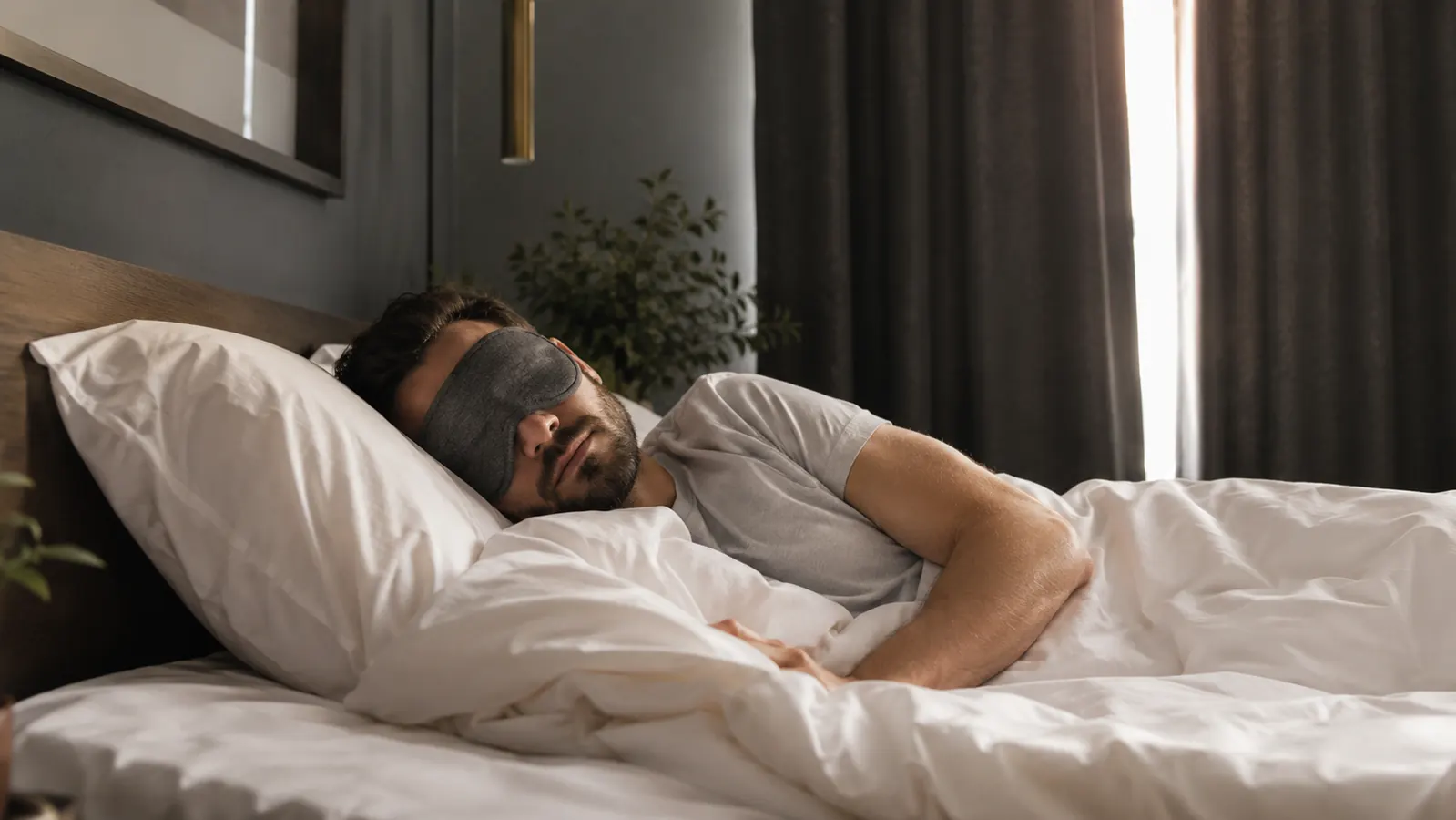
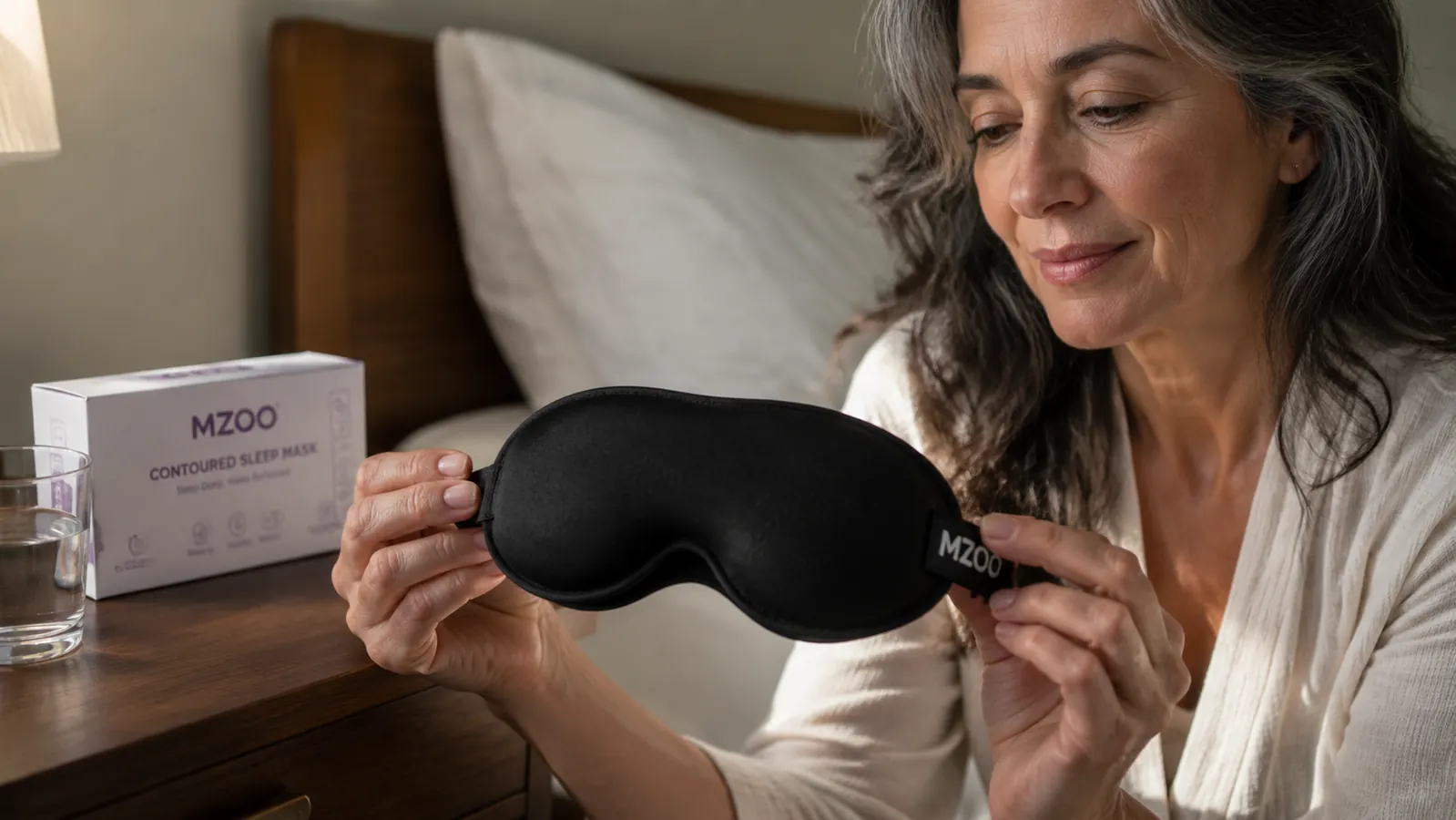
A coworker who worked the same overtime rotation I did was the one who mentioned the MZOO mask she'd been wearing for months, and she said the thing that actually sold me wasn't the blackout claim, every mask on Amazon claims that. It was the shape. Instead of a flat pad pressed against closed eyes, it has two separate contoured cups, so there's actual open space in front of each eye and the fabric only touches your face around the edges, along the brow, the temples, and the bridge of the nose.
The first afternoon I wore it, I remember lying there waiting for the familiar bar of light to show up on my eyelids at 12:47 like it always did. It didn't. Not a glow, not a shadow, nothing. The molded bridge piece sat against the top of my nose without any gap, which is where every flat mask I'd tried before had let a thin sliver of daylight through no matter how tightly I cinched the strap. I didn't fully trust it for the first few days, honestly, I kept thinking I'd wake up and find I'd shifted it in my sleep. I hadn't.
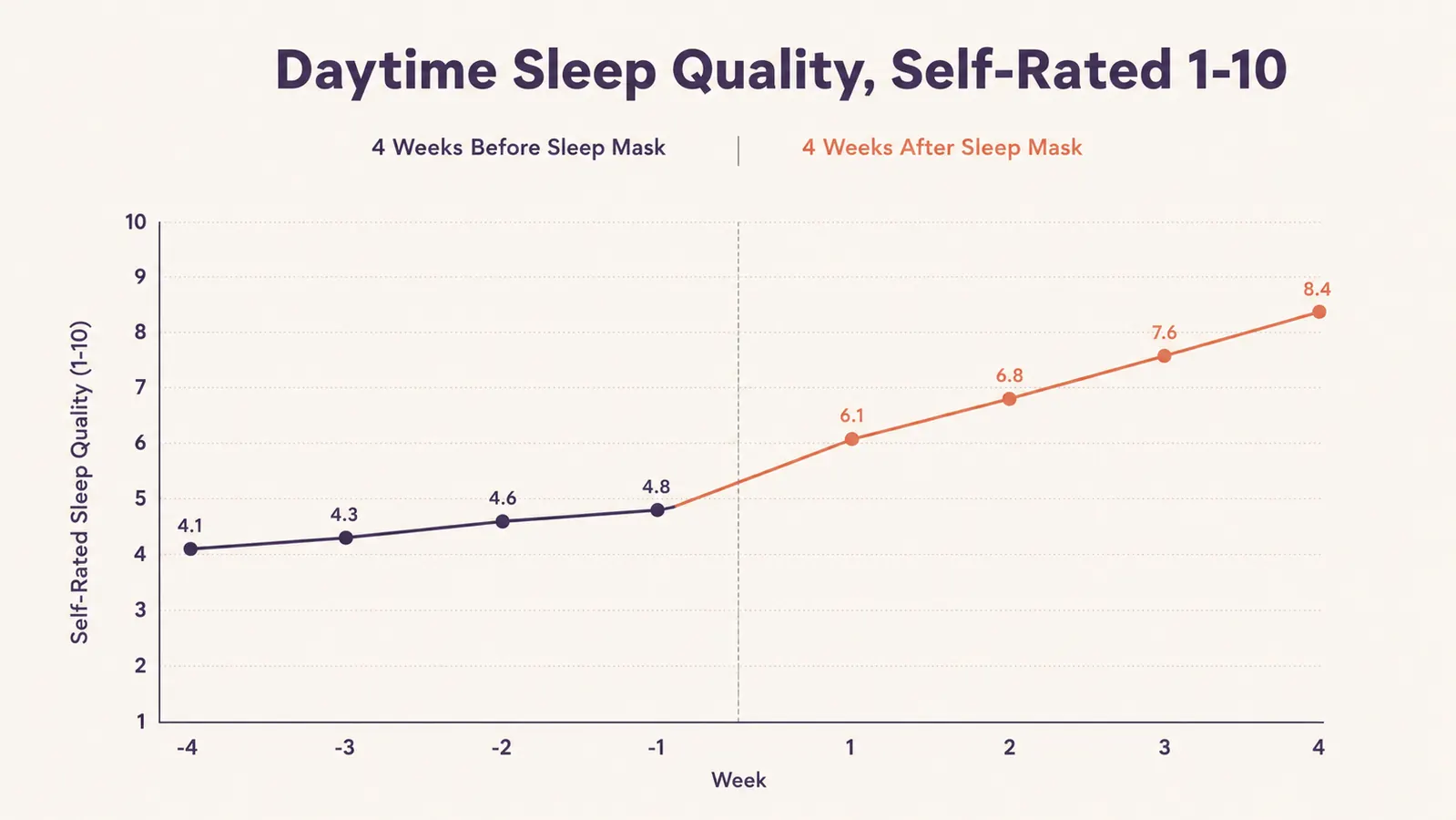
Two weeks in, the change wasn't dramatic in the way you'd want it to be for a good story. It was quieter than that. I stopped surfacing at 1pm feeling like I'd been interrupted mid-thought. I started waking closer to my actual 4pm alarm instead of drifting awake forty minutes early and lying there annoyed. I still wore earplugs for the traffic on the street, that's a separate problem with a separate fix, but the light problem, the one I'd assumed was just permanent, was gone within days rather than months.
I won't pretend it's flawless. The strap took some adjusting the first week, and if you sleep on your side and toss around like I sometimes still do, it can shift slightly and need a quick nudge back into place. It's also not going to fix a room with traffic noise or a mattress that's too hot, those are different problems with different tools, and I've written up a fuller breakdown of blocking daytime light specifically if that's the piece you're stuck on. But for the actual sunlight crossing my eyelids at almost the same minute every day, this was the first thing that made it simply stop happening.
What I'd Tell You If We Were Sitting at My Kitchen Table
If you're where I was, tape on the curtain edges, an alarm clock that goes off before your body's ready, and a nagging feeling that daylight sleep is just something you'll never solve, I wouldn't tell you this mask fixes everything. It fixes one specific thing extremely well: it keeps light off your eyes even when the room around you can't. If your problem really is light, the sliver at the curtain edge, the headlights, the streetlight timer, it's worth the fairly small cost of trying. If your problem is heat or noise, look there first, because no mask will fix a mattress that runs hot. I just know that for me, the room stopped mattering nearly as much once my eyes stopped being the last thing letting the day in.
See what's actually blocking the light on your face
Check today's price and current availability before you buy another curtain you don't need.
Amazon Check Today's Price on Amazon →