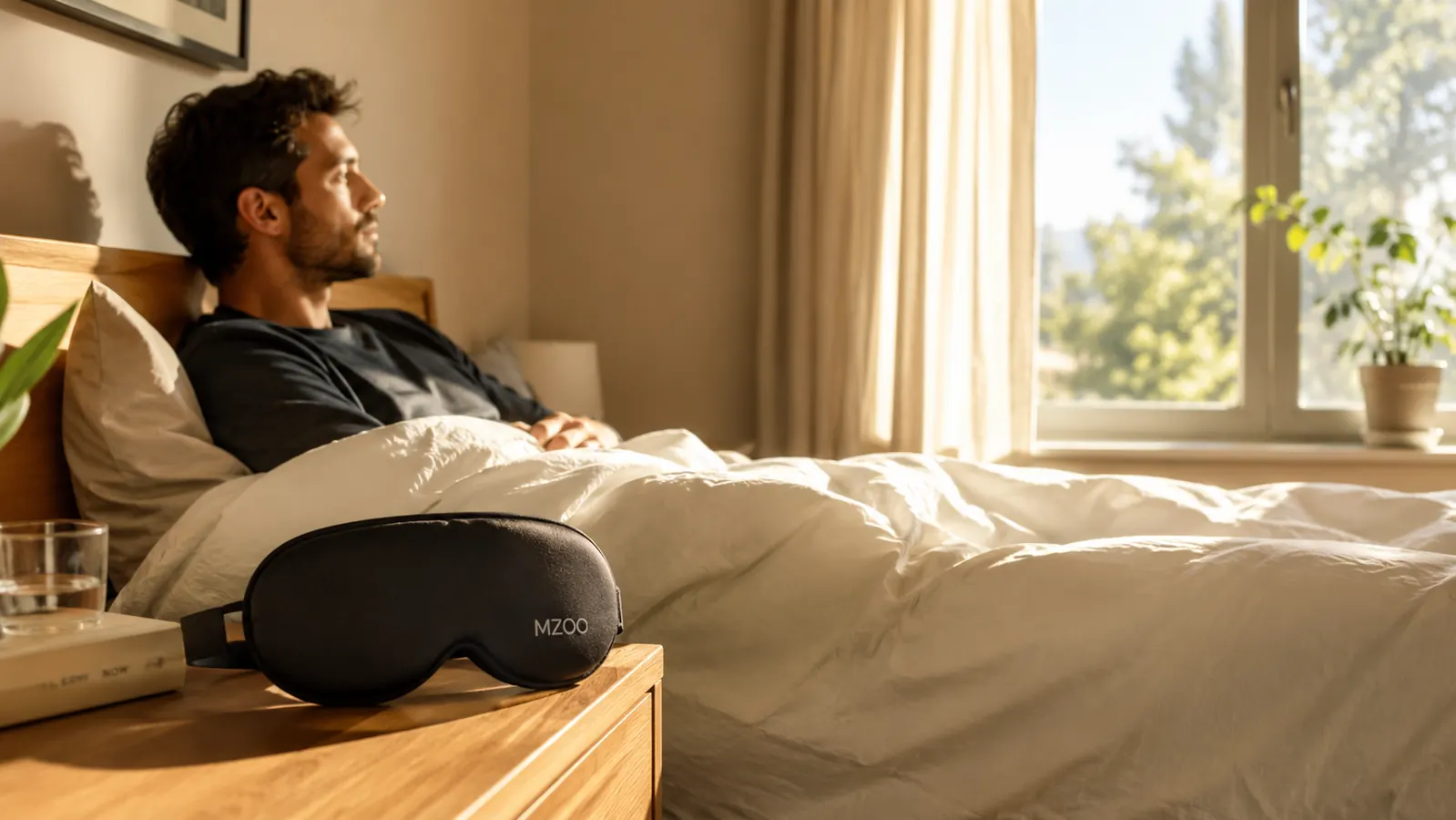
I bought my first MZOO sleep mask in January, on a recommendation from a listener who emailed the station after one of my overnight shifts. Eleven years of producing an overnight radio show means my day starts when most people's is ending, and it means I go to bed around 9am and try to stay asleep until 4pm. My bedroom faces west, second floor, and by early afternoon the sun comes straight through that window like someone flipped a switch. Add in daytime traffic noise from the street below, and you can understand why I've tried more blackout curtains and sleep masks than I care to admit. The MZOO is the one that's stayed on my nightstand for six months straight, which for me is the real test.
I want to be upfront that this isn't a mask that solves everything. It solves light, mostly, and it solves it well. It does not solve traffic noise, so I still run a fan for that. But if you've ever tried to sleep through actual daylight, you know that light is often the bigger enemy, because your body reads it as a signal to wake up no matter how tired you are. Blackout curtains helped some, but there was always a seam of light along the edge of the frame by early afternoon, and a mask was the only way to close that gap completely.
The Quick Verdict
The best light-blocking mask I've tried for daytime sleeping, with a contoured design that doesn't press on your eyes, though the elastic strap softens a little after several months of daily washing.
Amazon Check Today's Price →Still fighting the sun through your curtains at 9am?
The MZOO's contoured eye cups are the reason I stopped losing my afternoons to daylight. Check today's price on Amazon before you buy another flat foam mask that leaks light at the nose.
Amazon Check Today's Price on Amazon →How I've Used It
My routine hasn't changed in eleven years: overnight shift ends around 7:30am, I'm in bed by 9am, and I need to stay asleep until 4pm regardless of what the sky is doing. In January and February that wasn't a huge test, since the sun sets earlier and my west-facing window wasn't throwing much heat or light my way during the hours I needed to sleep. But by April and into the summer months, that window turns into a spotlight by early afternoon. That's when a sleep mask stops being optional and becomes the difference between five hours of real sleep and a groggy, interrupted three.
I wear the MZOO every single day I sleep, which is five to six days a week depending on my schedule. I wash the mask by hand roughly once a week, since I sweat a little in the warmer months, and I've kept a rough mental log of how it's held up: whether light is still getting blocked at the edges, whether the strap has loosened, and whether the foam has started to flatten. I also tracked, in a loose way, how many nights I woke up before my alarm because sunlight got through, since for me that's the number that actually matters.
The short version: the light blocking held up better than the strap did. If you're deciding between this and a cheaper flat mask, that tradeoff alone might settle it. For anyone weighing sleep masks against other approaches to blocking afternoon light, I laid out a broader comparison in 10 reasons sleep masks improve sleep quality, which gets into why masks tend to outperform curtains alone for daytime sleepers like me.
The Contoured Design, and Why It Matters at 2pm
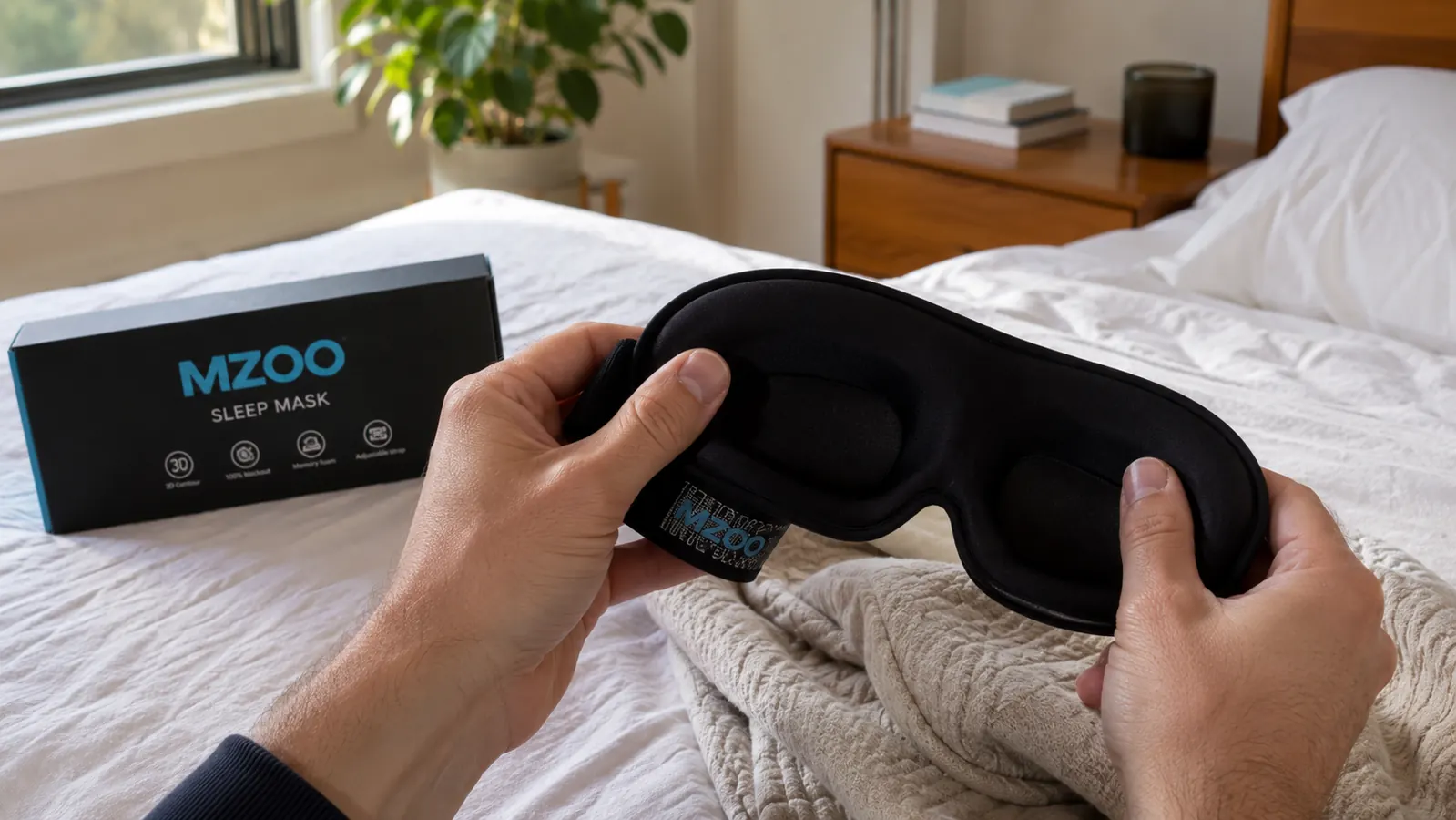
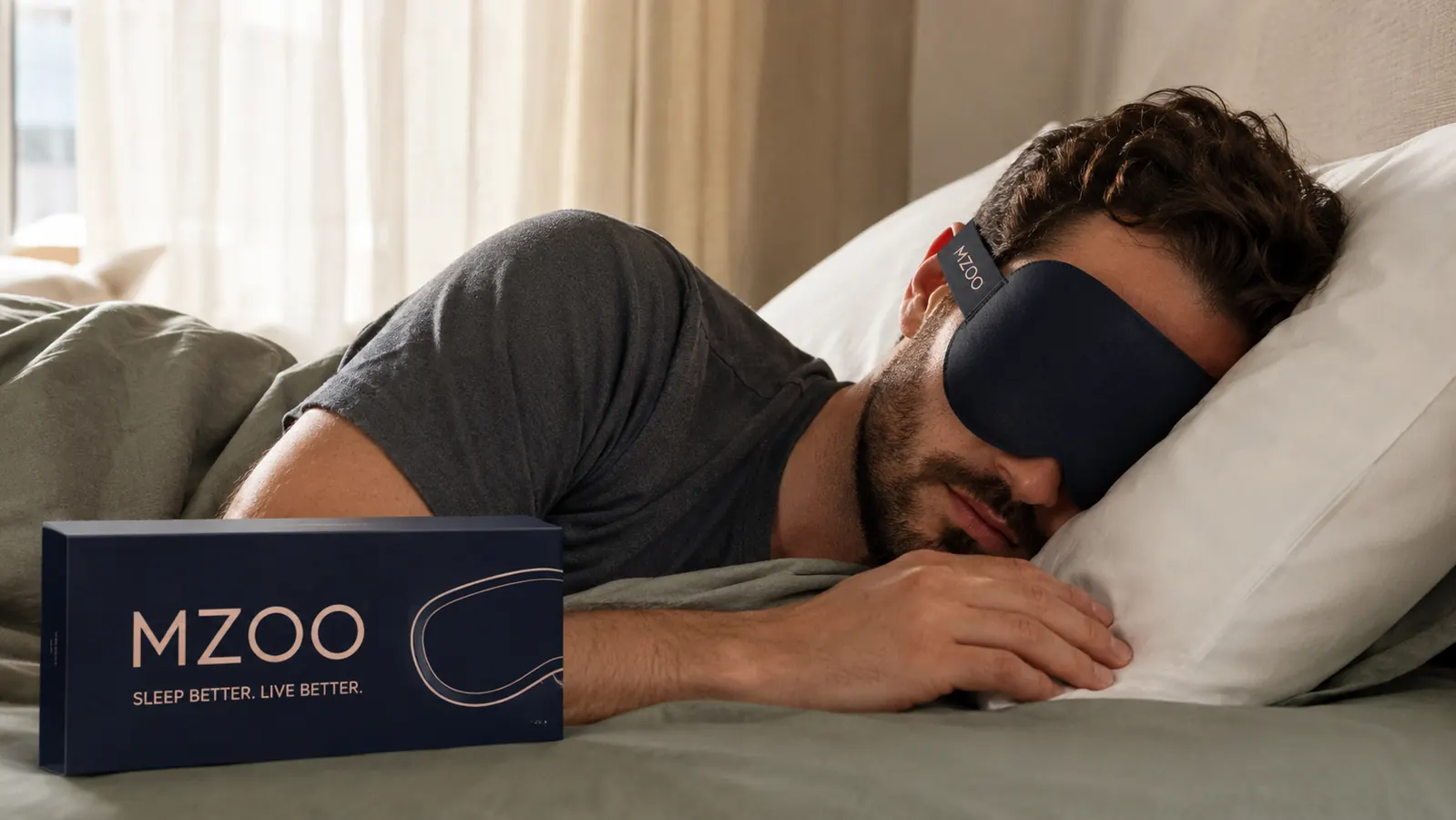
The MZOO's whole pitch is the 3D contoured eye cups, deep enough that the material never actually touches your eyelids. I was skeptical of this at first because I've owned masks that claimed "zero pressure" and still left a mark on the bridge of my nose after an hour. The MZOO's cups are genuinely deeper than most masks in this price range, and there's real room in there. I can open my eyes fully inside the mask, which matters more than you'd think when you wake up disoriented at 1pm wondering what time it actually is.
The light blocking comes down to two things: the depth of those eye cups and the fit around the nose bridge, which has a soft, adjustable foam strip. In my west-facing room, the worst light leak on cheaper masks is always at the bottom, right where the mask meets the nose. On a bright afternoon, that thin sliver of light is enough to pull me out of deep sleep. The MZOO's nose bridge foam compresses to the shape of your face instead of sitting flat, and over six months I've had maybe a handful of afternoons where I noticed any light at all, usually because I'd shifted the mask in my sleep.
The outer shell is a slightly stretchy, breathable fabric rather than the shiny synthetic material some masks use, which matters when you're sleeping through the warmest part of the day. I don't wake up with a sweaty face the way I did with a satin mask I tried back in March. There's also a small amount of give in the fabric around the temples, so the mask doesn't feel like it's clamping down when you first put it on, which made the first week of adjusting to it much easier than I expected.
One detail I didn't expect to matter this much: the mask stays put through REM sleep, which for me tends to happen in the last stretch before 4pm when I'm more likely to shift positions. A mask that slides down onto your cheeks during that window defeats the whole purpose, since that's often the exact hour the sun is strongest through my window. Over six months I can count on one hand the mornings, or rather afternoons, where I woke up with the mask askew.
Comfort for Side Sleeping
I'm a side sleeper, which is where a lot of masks fail. Flat masks get pushed up against the pillow and either pop off your face or dig into your eye socket when you roll over. The contoured cups on the MZOO actually help here, since there's enough clearance that the pillow doesn't compress the mask directly into your eyelid. I still notice some pressure on my cheekbone if I sleep hard on one side for a few hours, but it's nothing close to the discomfort I had with a foam mask that flattened out within the first month.
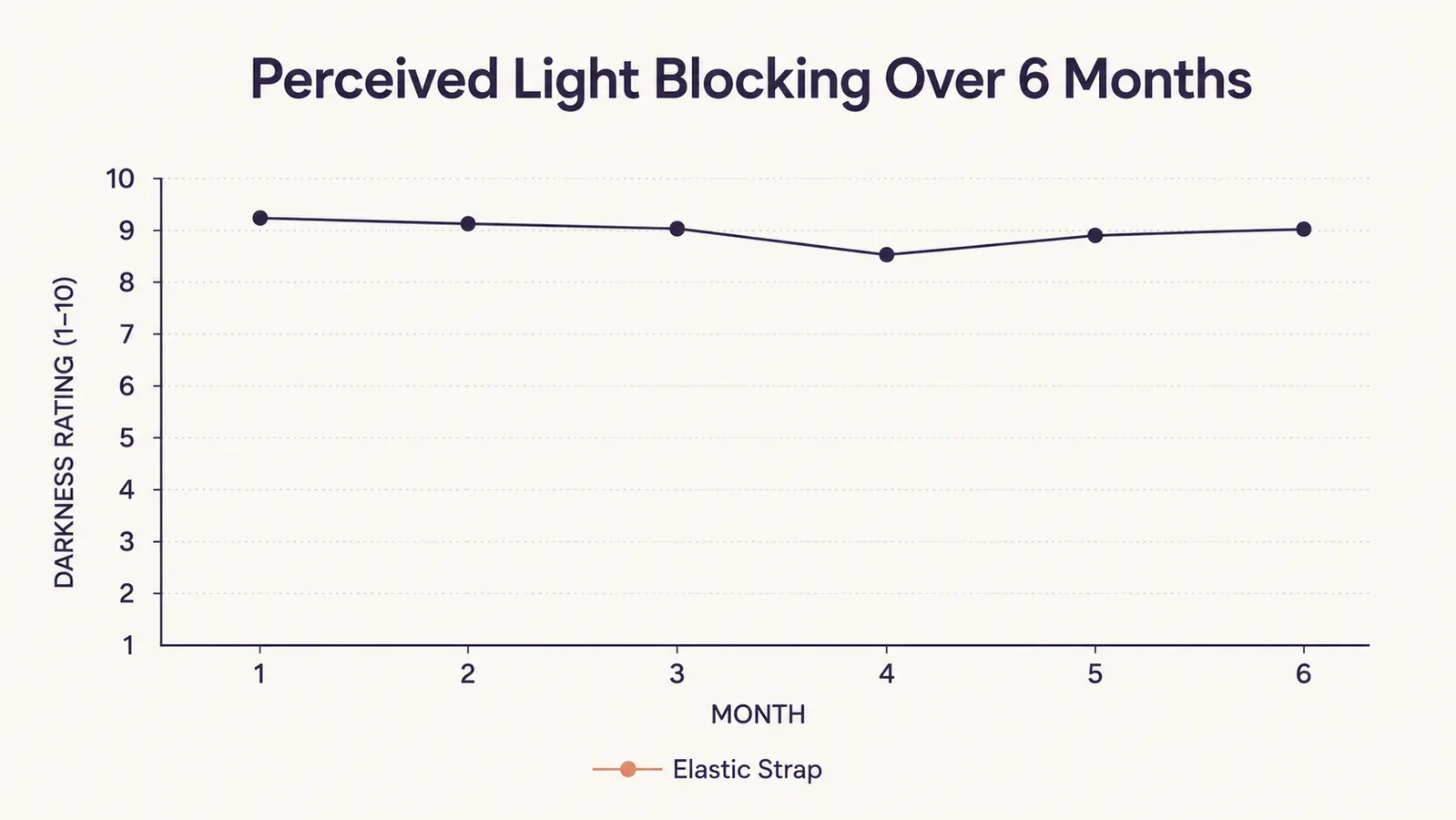
The strap is where I have my one real complaint, and it took about four months to show up. It's a wide elastic band, adjustable with a velcro closure, and it started out snug enough that the mask never shifted overnight. Around month four, after dozens of hand washes, the elastic softened noticeably. I now have to cinch it a notch tighter than I did in January to get the same seal. It's not a dealbreaker, and the mask still works, but if you're the type who wants gear to perform exactly the same on day 180 as day one, this is the spot where the MZOO shows its age first.
By month four the strap had softened enough that I had to tighten it a notch. Everything else about this mask still feels like the one I unboxed in January.
Durability Through the Seasons
Six months on this schedule covers a real range of conditions, from a mild winter afternoon to the kind of July sun that turns my west-facing window into a heat lamp by 2pm. The eye cup foam hasn't lost its shape in any noticeable way, and I was watching for that specifically after a previous mask flattened out in under eight weeks. Pressing on the cups now feels close to how it felt the first week, with the same rebound.
The fabric shows the most wear where my thumbs grip it to put it on and take it off each day, a slightly worn patch near the temple on both sides. It's cosmetic, not functional, and the mask still seals just as well there. The strap is the one component I'd flag for anyone planning to use this daily for a year or more rather than six months, since the softening trend suggests it will need replacing, or at least a tighter setting, again down the line.
Tradeoffs and What I Considered Instead
Before settling on the MZOO, I looked hard at a couple of premium contoured masks, including the Manta Sleep mask, which uses adjustable eye patches instead of a fixed cup. I go through that comparison in detail in MZOO vs Manta Sleep mask, but the short version is that the Manta gives you more customization for an unusual face shape, and the MZOO gives you a simpler, cheaper option that fit my face fine out of the box.
I also tried a cooling gel mask for a few weeks in February, mostly because I run warm during the day. It felt great for the first twenty minutes and then warmed up to room temperature, at which point it was just a flat mask with none of the contoured benefits. I went back to the MZOO within a week, and it's been the only mask on my nightstand since.
The one thing I'd genuinely like changed is the strap material. A slightly stiffer elastic, or a strap that doesn't stretch out with hand washing, would make this close to perfect for someone sleeping on this schedule for years rather than months. I'd also welcome a slightly narrower travel version, since the full-size box doesn't compress down much for a bag.
What I Liked
- Contoured eye cups block light without any pressure on the eyes
- Nose bridge foam seals out afternoon sun better than flat masks
- Breathable fabric doesn't trap heat during daytime sleep
- Comfortable enough for side sleeping without popping off overnight
- Adjustable strap fits a range of head sizes
- Eye cup foam holds its shape after six months of daily use
Where It Falls Short
- Elastic strap softens noticeably after several months of regular washing
- Doesn't address noise, only light
- Contoured cups add some bulk compared to a flat mask
- No compact travel version included
Who This Is For
If you sleep during daylight hours for any reason, an overnight schedule, a rotating shift, or just a bedroom that gets hit hard by morning or afternoon sun, this mask solves the specific problem of light leaking in at the edges. Side sleepers get more out of the contoured design than back sleepers will, since the deeper cups prevent the mask from digging in when your face is pressed into a pillow. It's also worth it for anyone who travels for work and ends up trying to sleep on a schedule that doesn't match the hotel room's blackout curtains, since the mask travels easily in a carry-on even without a dedicated case. I've packed mine for three work trips this year and it's held its shape in a suitcase pocket each time.
Who Should Skip It
If your main issue is noise rather than light, this mask won't help you on its own, pair it with earplugs or a fan instead. And if you want something with more adjustability for an unusually shaped face or a broken nose, the patch-style masks are worth a look before you commit here. People with very long eyelashes sometimes find any contoured mask brushes against the lash line when blinking inside it, so it's worth trying one on in person if you can before committing to a schedule like mine where you'll be wearing it for seven or eight hours at a stretch.
Six months later, this is still the mask on my nightstand.
If afternoon sun is wrecking your sleep the way it wrecked mine, don't wait for the next bright week to try to fix it. Check today's price on Amazon and see the current reviews for yourself.
Amazon Check Today's Price on Amazon →