

For eleven years I produced an overnight radio show, which meant my version of "bedtime" was somewhere around 9am. I'd get home as the neighborhood was starting its day, pull the blinds on a west-facing second-floor bedroom, and try to convince my body that the sun cutting through the gaps was actually midnight. It never fully worked, and for most of that decade the fix I kept reaching for was another blanket, another curtain, another gadget, before a plain 15 pound weighted blanket finally did what none of them had.
I want to be clear that this wasn't insomnia in the clinical sense. I could fall asleep fine. What I couldn't do was stay asleep, or feel like the sleep I got actually counted for anything. By 4pm, when I was supposed to be waking up rested, I'd usually managed four or five broken hours, most of it spent shifting positions and kicking off whatever blanket I'd started with. I'd surface feeling like I'd napped on a train, not slept through an afternoon.
I blamed the light for years. I bought blackout curtains, then a second blackout layer behind those, then one of those eye masks with the little foam cups so it doesn't press on your eyelids. All of it helped a little. None of it fixed the actual problem, which I eventually figured out wasn't light at all.
It was that I never felt still. Daytime traffic noise from the street below would register even through earplugs, not loud enough to wake me outright but enough to keep some low hum of alertness running the whole time. My body never got the signal that it was safe to fully let go. A friend who'd used one for anxiety mentioned a weighted blanket almost as an afterthought, the way people mention things they assume you've already tried. I hadn't. I figured it was another blackout curtain, a nice idea that would land somewhere in the 20 percent improvement range and get shelved.
I didn't wake up more rested that first afternoon. I woke up less aware that I'd been asleep at all, which is a different and much better thing.
The blanket that finally out-argued the daylight
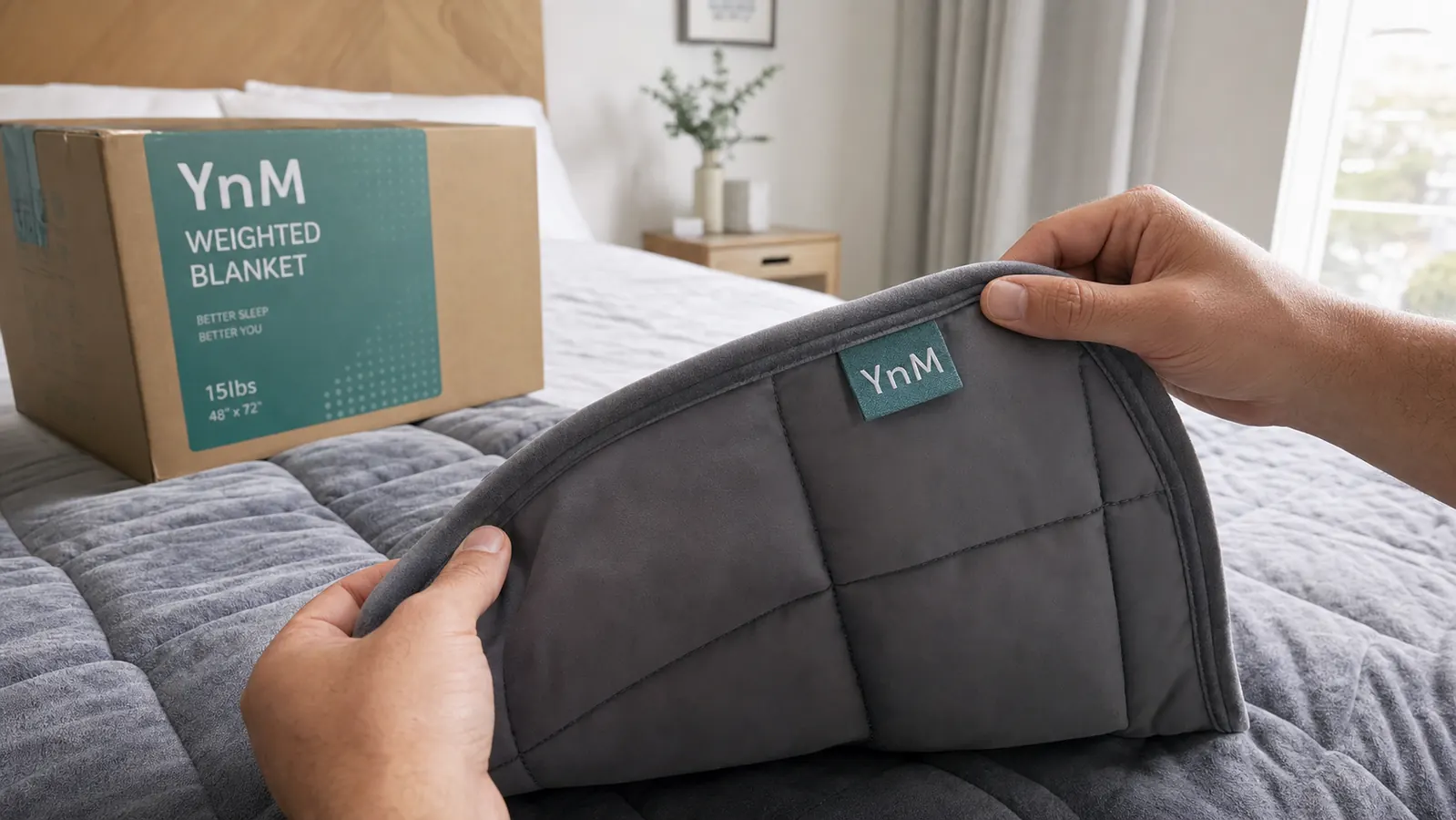
The <a href="/ynm-weighted-blanket-review-long-term">YnM 15lb weighted blanket</a> uses glass beads instead of plastic pellets, so it settles around you without the crinkle or the heat buildup some weighted blankets get blamed for. It's the one I still use, four years and a lot of daytime naps later.
Amazon Check Today's Price on Amazon →
The 15 pound YnM landed on a Tuesday, and I almost talked myself out of trying it that same afternoon because it looked, honestly, like overkill for a person who already runs warm. I unzipped the cover, felt the quilted squares of glass beads shift under my hands, and thought it might be too much. I used it anyway, mostly out of stubbornness after spending money on it. I fell asleep the way I always did, no faster, no slower. What changed was what happened after.
I didn't wake up at 11am the way I usually did, jolted by a delivery truck or a neighbor's lawn mower, heart already half racing before I knew why. I slept through to my alarm at 4pm. The traffic noise was still there. The sun was still doing its thing around the edges of the blackout curtain. But something about that even pressure across my chest and legs kept my nervous system from treating every outside sound like a reason to check in. It's not sedation. It's more like being held still enough that your body stops volunteering for extra vigilance.
The glass beads matter more than I expected going in. My first weighted blanket, a cheaper one I'd bought years earlier and abandoned, used plastic poly pellets that crinkled every time I turned over and ran hot within twenty minutes. Glass beads are smaller and denser, so the weight distributes more evenly and the blanket breathes better. I run warm even in a cool room, and this is the first weighted blanket I've owned that I didn't kick off by 2pm out of frustration.
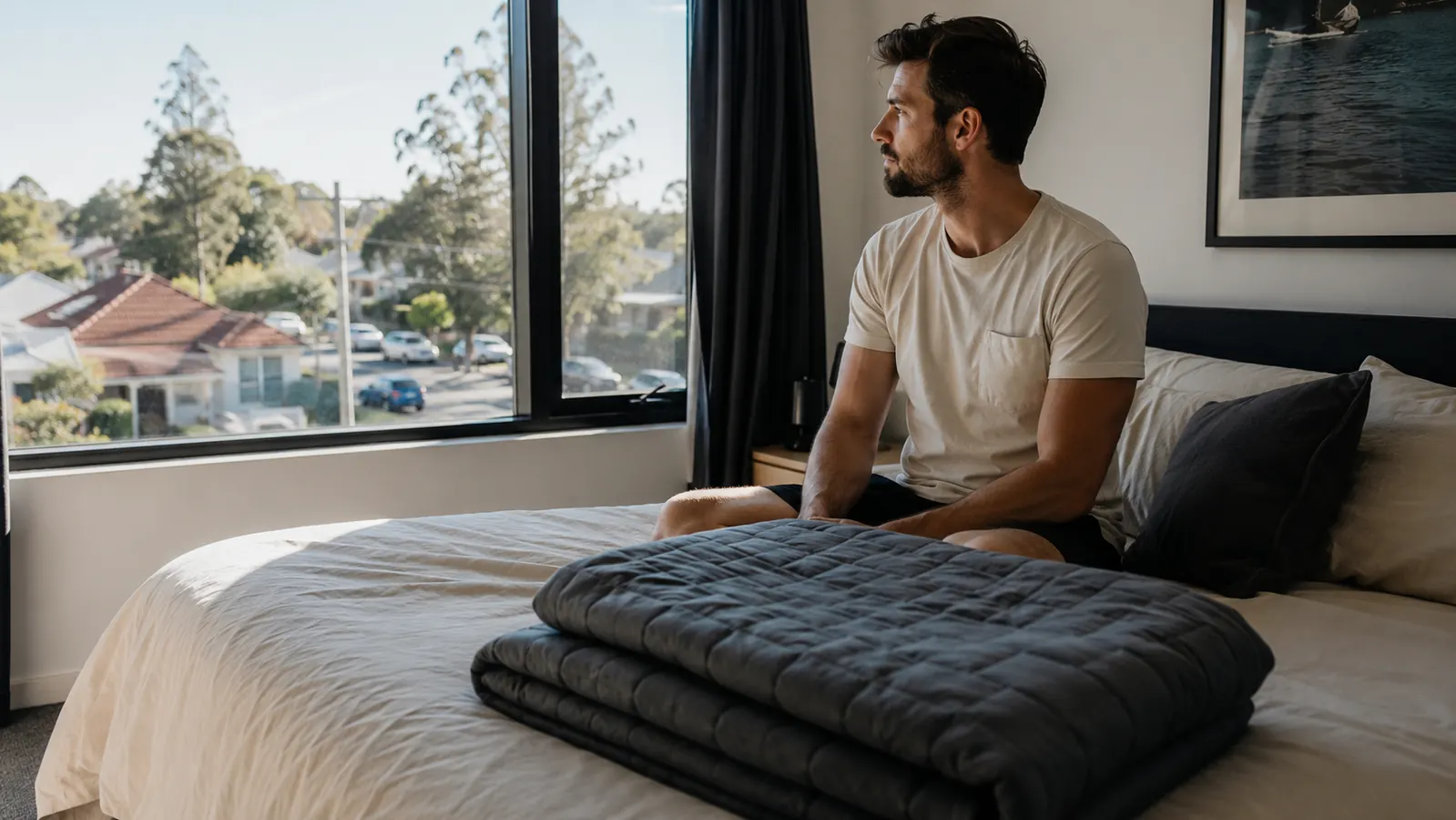
It took about two weeks before I trusted it enough to stop white-knuckling the transition into sleep. Somewhere in week three I noticed I was waking up at 4pm on my own, before the alarm, which had not happened in years. I started tracking it loosely, nothing scientific, just a note on my phone: did I wake up on my own or did the alarm do it. The ratio flipped from maybe one morning in ten to something closer to four or five nights a week.
I've since talked to a couple of people I work with about it, other producers and editors who keep the same backward schedule I do, and the story rhymes every time. Someone gets a weighted blanket for a completely different reason, anxiety, restlessness, a partner's snoring situation, and reports back that the actual surprise was how much steadier daytime sleep got. There's something specific about sleeping when the world outside is awake that a heavy, evenly distributed blanket seems to answer better than another blackout layer or a white noise machine ever did for me.
What I'd Tell You If We Were Sitting at My Kitchen Table
If you're reading this at 2am because you can't sleep, or at 2pm because you're trying to sleep and the world won't cooperate, I'm not going to tell you a blanket fixes everything. It didn't fix my schedule. It didn't make the traffic quieter or the sun less insistent. What it did was give my body one less thing to argue with while it tried to do the thing bodies are supposed to do anyway, which is rest. If you've already tried the curtains and the earplugs and you're still waking up feeling like you never really landed, a 15 pound blanket with glass beads is a cheap enough experiment to run before you assume the problem is unsolvable. It wasn't for me.
Worth trying before you assume nothing works
See the current price and available sizes for the <a href="/how-to-fall-asleep-faster-with-weighted-blanket">YnM weighted blanket</a> on Amazon. Most people know within the first week or two whether the pressure helps.
Amazon Check Today's Price on Amazon →