

For eleven years I produced an overnight radio show, which meant I slept from about 9am to 4pm in a west-facing second-floor bedroom where the afternoon sun comes straight through the window and the street below runs full daytime traffic. The schedule was hard enough on its own, but for the first year I was also fighting a mattress that came with the apartment, a firm innerspring model that felt like it hadn't softened a single millimeter since whatever decade it was made in. I'd wake up most afternoons with a dull ache in my hip and shoulder, the exact pressure points you'd expect from sleeping on your side on something that doesn't give at all.
Replacing the mattress outright wasn't in the budget, and I wasn't convinced a new one would even solve it, since firmness preference is personal and I didn't want to gamble a few hundred dollars guessing. What actually worked was a mattress topper, but not the first one I tried. My first attempt was too thin to matter and my second was fine in a cooler month but slept hot once the afternoon sun hit that west-facing window. The topper that finally fixed it was a 2-inch gel-infused memory foam layer, and the five steps below are the exact process I used to figure out why that specific combination worked when the others didn't.
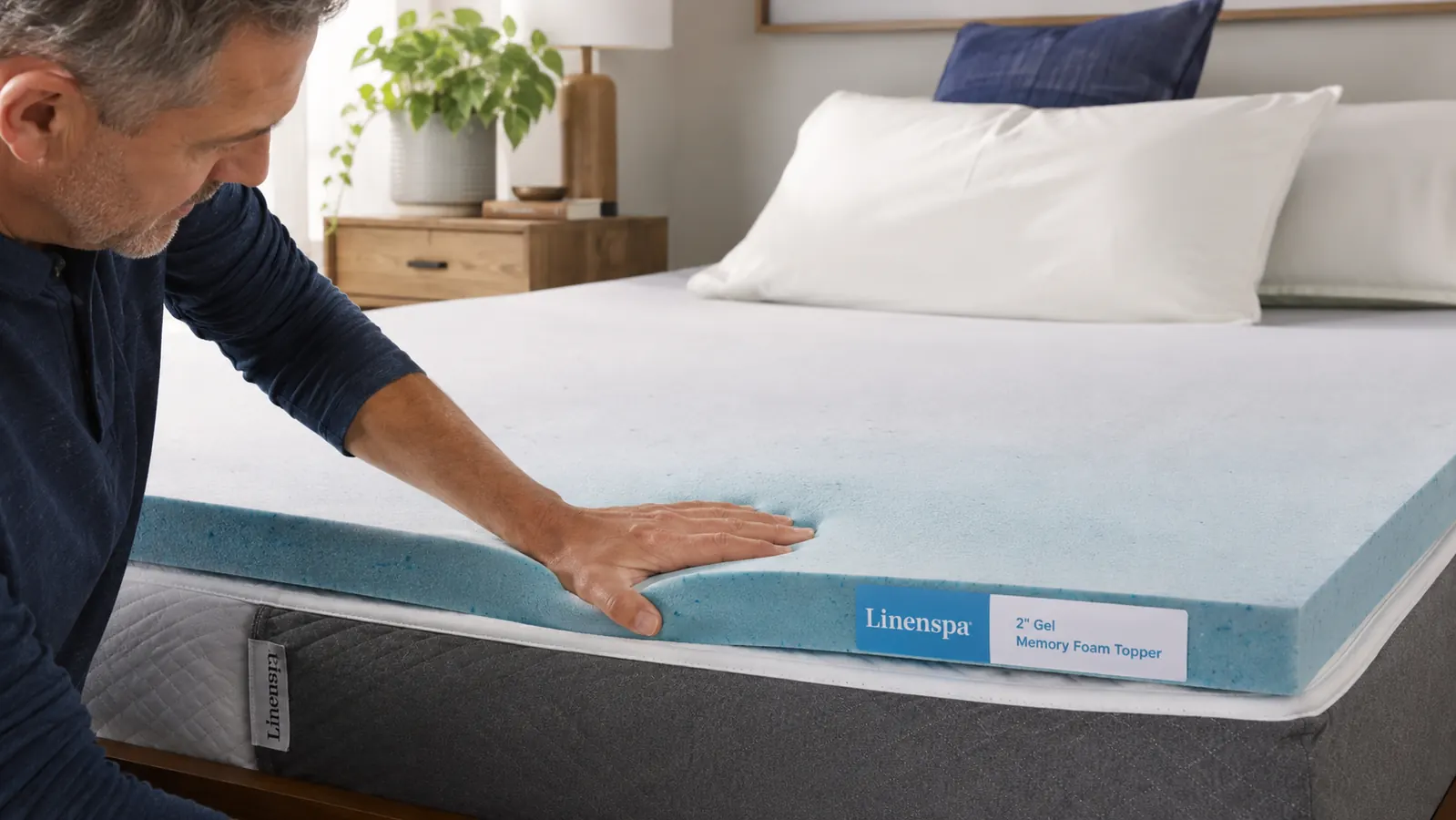
The 2-inch layer that took the edge off a mattress that felt like a park bench
This Linenspa topper is gel-infused memory foam in a plush feel, thick enough to actually change how firm a mattress feels without turning your bed into a heat trap. See today's price and current availability on Amazon.
Amazon Check Today's Price on Amazon →Step 1: Figure Out Whether It's Actually the Mattress, Not the Topper You Need First
Before buying anything, spend a few nights paying attention to where the discomfort actually shows up. For me it was hip and shoulder pressure on my side, which is the classic sign that a mattress isn't giving enough at the points where your body carries the most weight. If your issue is a sagging middle or a mattress that dips in the center, a topper won't fix that. It sits on top of the problem instead of solving it, and no amount of foam changes a broken support core underneath.
A topper works when the mattress itself is structurally fine but simply too firm for your body or sleep position. That's a very common situation, especially with mattresses bought sight unseen, inherited from a previous tenant, or chosen years ago when your body had different needs. Firmness preference also genuinely changes with age and with sleep position, so a mattress that felt fine at 25 can feel unreasonably hard at 35, with nothing actually wrong with the mattress itself.
If you're still deciding whether a topper is even the right fix for your situation, I laid out the broader case for it, including a few reasons that surprised me, in 10 reasons a mattress topper can fix an old mattress. It's worth reading before you spend money, since the diagnosis matters more than the product you eventually pick.
Step 2: Choose Thickness Based on How Firm the Mattress Actually Is
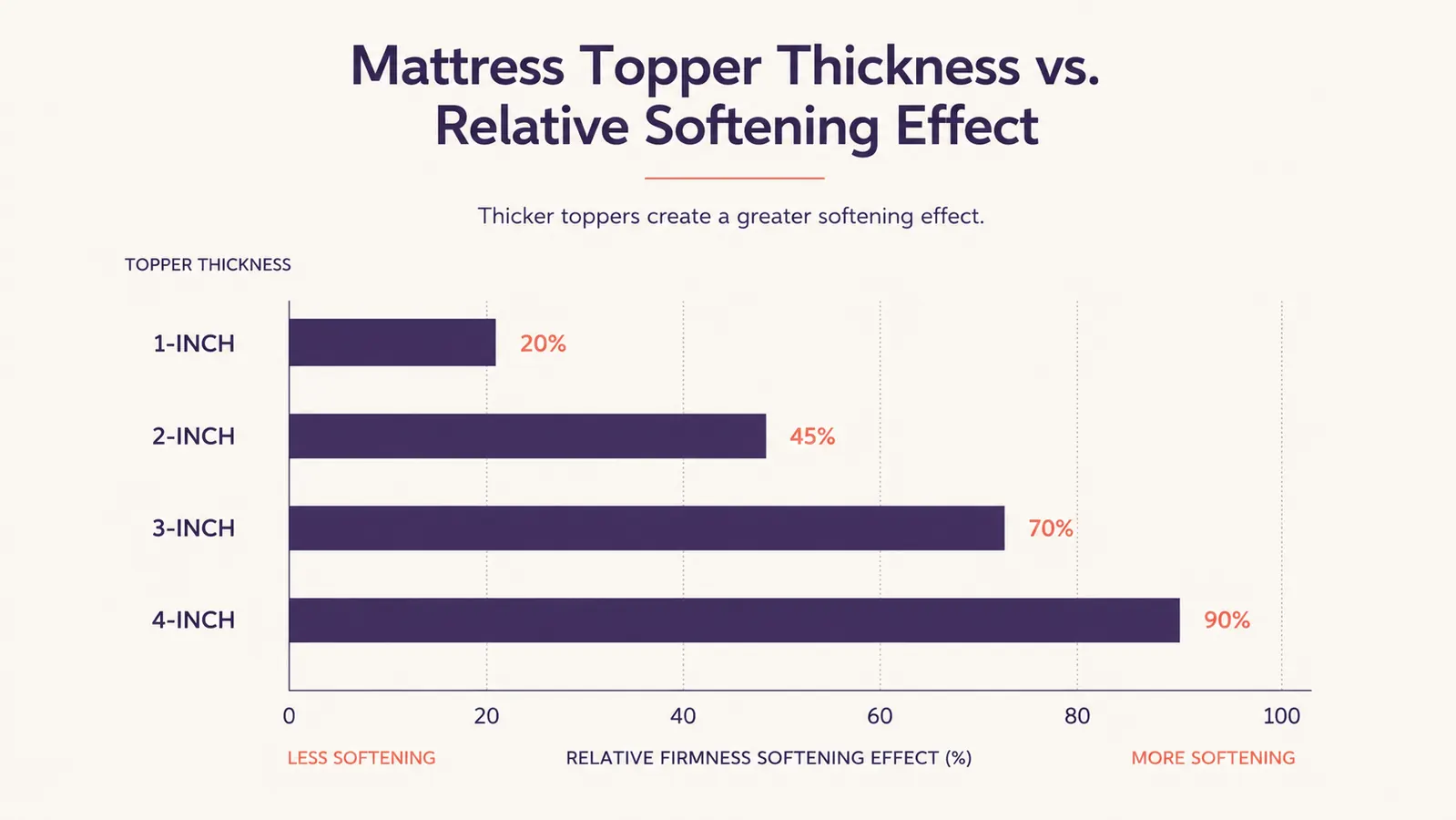
Thickness is the single biggest lever you have, and it's the one people guess wrong most often. A 1-inch topper barely registers on a genuinely firm mattress. It softens the very top surface but the firmness underneath still comes through within a few minutes of lying down. A 3 or 4-inch topper goes the other direction and can feel unstable, especially for anyone who shifts positions a lot or gets in and out of bed at odd hours the way I do.
For a mattress that's firm but not rock solid, 2 inches is the range that actually changes how the bed feels without turning it into something that swallows you. That's the thickness I landed on after the 1-inch attempt did nothing and I read enough reviews to know a taller topper often causes edge instability and heat retention issues on its own. Two inches of gel-infused memory foam gave enough give to relieve pressure points while still feeling like one supportive surface rather than two disconnected layers.
If your mattress is only mildly firm, or you sleep on your back rather than your side, you might get away with something thinner. But if you're waking up with actual pressure pain, particularly on your hip, shoulder, or lower back, don't undersize this. A topper that's too thin to matter is the most common reason people try one, decide toppers don't work, and go back to a firm mattress they still don't like.
Step 3: Pick a Density and Material That Won't Sleep Hot
Standard memory foam has a reputation for sleeping hot, and that reputation is earned. Dense foam traps body heat, and if you already sleep during the warmest part of the afternoon like I do, an un-vented, un-infused foam topper can undo any comfort gain by making you sweat through the night, or in my case, through the day. Gel-infused memory foam solves most of this. The gel beads disperse heat away from your body instead of holding it against the surface, which made a real difference on the west-facing side of my apartment where the afternoon sun turns the room warm by 1pm most days.
Feel matters too, separate from thickness. "Plush" foam has more initial softness and a gentler transition into the firmer support layer below, which is what most people looking to soften a hard mattress actually want. A firmer-feel foam topper defeats some of the purpose, since you're trying to add give, not just add height. Read the product description carefully here, because "memory foam topper" covers a wide range of actual feels, and two toppers with the same thickness spec can behave completely differently on the same mattress.
I went with the Linenspa 2-inch gel-infused option specifically because it hit both requirements at once: enough plushness to relieve the pressure points causing my hip and shoulder ache, and enough gel infusion to keep sleeping temperature reasonable in a room that gets direct afternoon sun for hours at a stretch. I wrote up the full experience of living with it, including what surprised me after the first few weeks, in my honest review of the Linenspa mattress topper.
Step 4: Unbox It Correctly and Give It Real Time to Expand
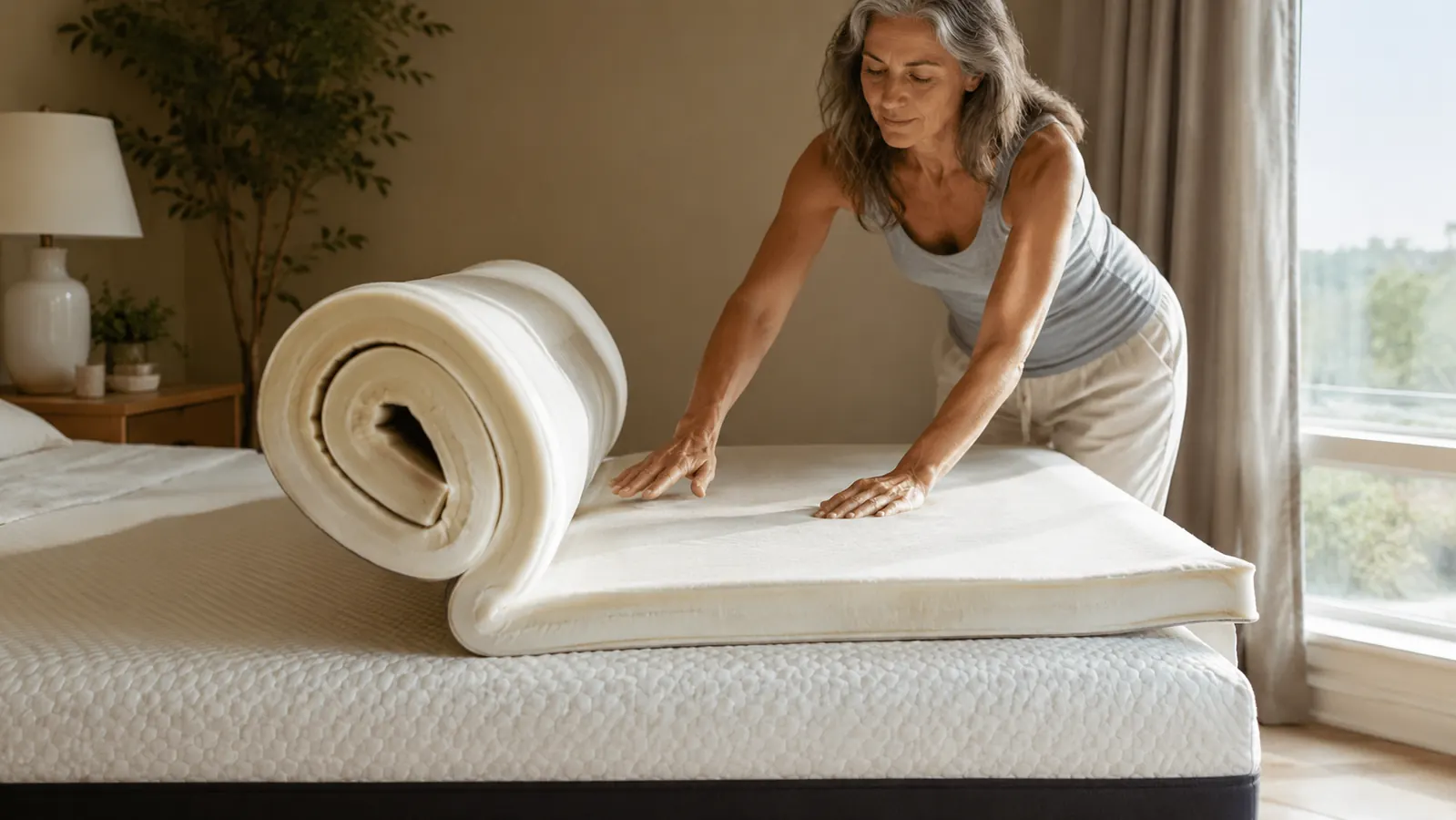
Most compressed memory foam toppers arrive rolled tightly and vacuum-sealed, and the instructions usually say something like "expands within 24 to 72 hours." Take that seriously. The first night I unboxed a topper years ago, I put a fitted sheet on immediately and slept on it while it was still partially compressed, and it felt firmer and lumpier than it does once fully expanded. Judging a topper on night one, before it's had time to fully decompress, is a common way people write off a product that would have felt completely different by night three.
Unroll it flat on the mattress as soon as it arrives, even if you're not sleeping on it that same day. Let it sit uncovered for a few hours in a room with decent airflow. New foam also carries a mild off-gassing smell out of the box, more noticeable with denser or gel-infused foam, and it fades faster with the topper unrolled and exposed to air than it does sealed under a fitted sheet. I gave mine a full day unrolled before sleeping on it and didn't notice any smell by the second night.
Don't fold or crease a foam topper while it's expanding, and don't stack anything heavy on it during this window. Creases from the shipping fold can take longer to fully release if something's pressing down on that exact spot while the rest of the foam is trying to expand around it. Give it flat, open space for the first day and you'll get a more even, consistent feel once it's done.
Step 5: Anchor It So It Doesn't Shift or Bunch Overnight
A topper that slides around under your sheet undoes the whole point of the upgrade, since a bunched-up corner creates a new pressure point exactly where you don't want one. Most memory foam toppers don't have built-in straps, which means the fitted sheet is doing double duty holding both the mattress and the topper in place. Get a fitted sheet with enough pocket depth for the combined height of your mattress plus the topper, usually 2 to 4 inches deeper than what you were using before, or the corners will pop off within the first week.
If your fitted sheet still doesn't hold things in place, a topper with corner straps or a topper-specific fitted cover solves it directly. I ended up using deep-pocket sheets rated for up to 18 inches, which was overkill for my setup but meant I never had to think about it again. The goal is a topper that behaves like one solid surface with your mattress, not a separate layer you can feel shifting when you move at night.
Check it again after the first week. Foam settles slightly once it's been slept on regularly, and a topper that seemed perfectly anchored on day one can develop a small amount of slide once it's fully broken in and slightly compressed from actual use. A quick corner check every so often is a small habit that prevents the exact bunching problem that makes people give up on a topper that's otherwise doing its job.
What Else Helps
A mattress protector between your topper and your fitted sheet extends the life of the foam and catches spills before they reach it, which matters more than it sounds since foam toppers are harder to fully dry out than a regular mattress if something soaks through. I added one within the first month, mostly for the spill protection, and didn't notice any change in feel once it was under the sheet.
If your sleep issue is more about temperature than firmness, pair the topper with a breathable pillow or cooling pillowcase rather than trying to solve everything with foam thickness alone. Firmness and temperature are two separate problems that happen to show up together on a lot of mattresses, especially older ones, and treating them as one issue usually means neither gets properly fixed. I handle the temperature side of my afternoon sleep with a separate cooling setup, and the topper only ever had to solve the firmness half of the equation.
The mattress wasn't broken. It just didn't give in the places my body needed it to. Once I stopped trying to replace the whole thing and started treating thickness, density, and break-in time as three separate decisions, the fix was a lot simpler than I expected.
Give the mattress you already own one real chance before replacing it
If a firm mattress is the only thing standing between you and a decent stretch of sleep, this 2-inch gel-infused Linenspa topper is the exact thickness and density combination that fixed it for me without sleeping hot. Check today's price and current availability on Amazon.
Amazon Check Today's Price on Amazon →